-
The temperature sensitivity of soil carbon release (Q10, the factor by which decomposition rates change with a 10°C increase) is a key determinant of terrestrial carbon–climate feedbacks under global warming.
-
Tree species diversity may play an important role in regulating this process by shaping soil carbon stabilization and microbial functioning, yet the mechanisms remain poorly understood. Using a long- term biodiversity manipulation experiment in a subtropical forest, we investigated how increasing tree species richness affects Q10 by altering soil carbon stabilization processes, microbial community composition and fungal functional composition.
-
We found that tree species richness significantly reduced Q10 under standardized laboratory incubation, indicating lower intrinsic temperature sensitivity of soil carbon release. This effect was associated with lower relative abundance of carbohydrate- derived carbon, higher aromatic- to- carbohydrate carbon ratios and a greater proportion of mineral- associated organic matter. In parallel, microbial community variation along a fungal- to- bacterial compositional gradient and an increased relative abundance of saprotrophic fungi were associated with lower Q10. These physicochemical and microbial shifts were linked to indicators of greater soil carbon stabilization and to reduced thermal sensitivity of soil carbon release.
-
Synthesis. Together, our results suggest that tree species richness reduces the potential temperature sensitivity of soil carbon release through coordinated shifts in soil carbon fractions, organic matter chemistry and microbial functional composition.
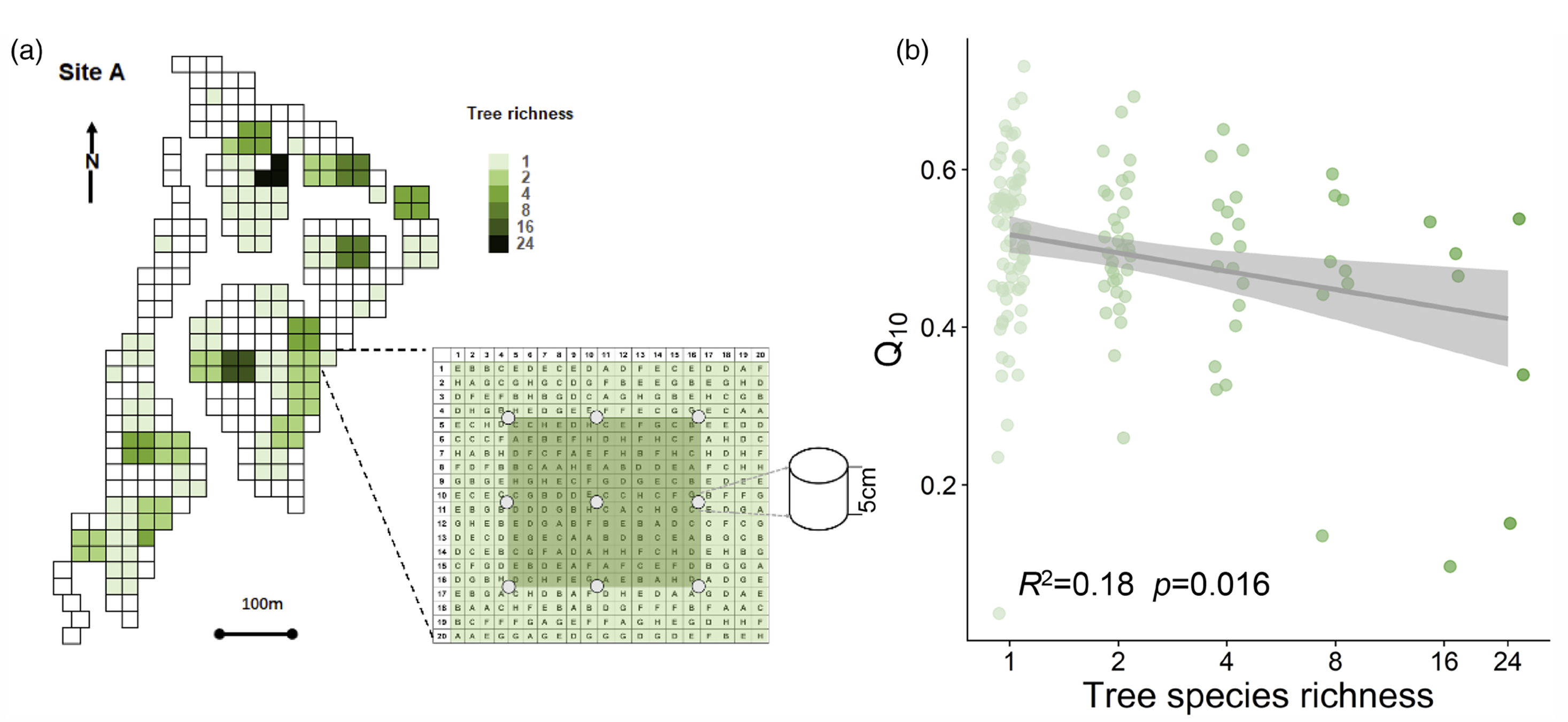
Figure 1. (a) Experimental design and sampling points in 1- mu plots and (b) effects of tree species richness on the intrinsic temperature sensitivity of soil carbon release (Q10) under laboratory incubation.
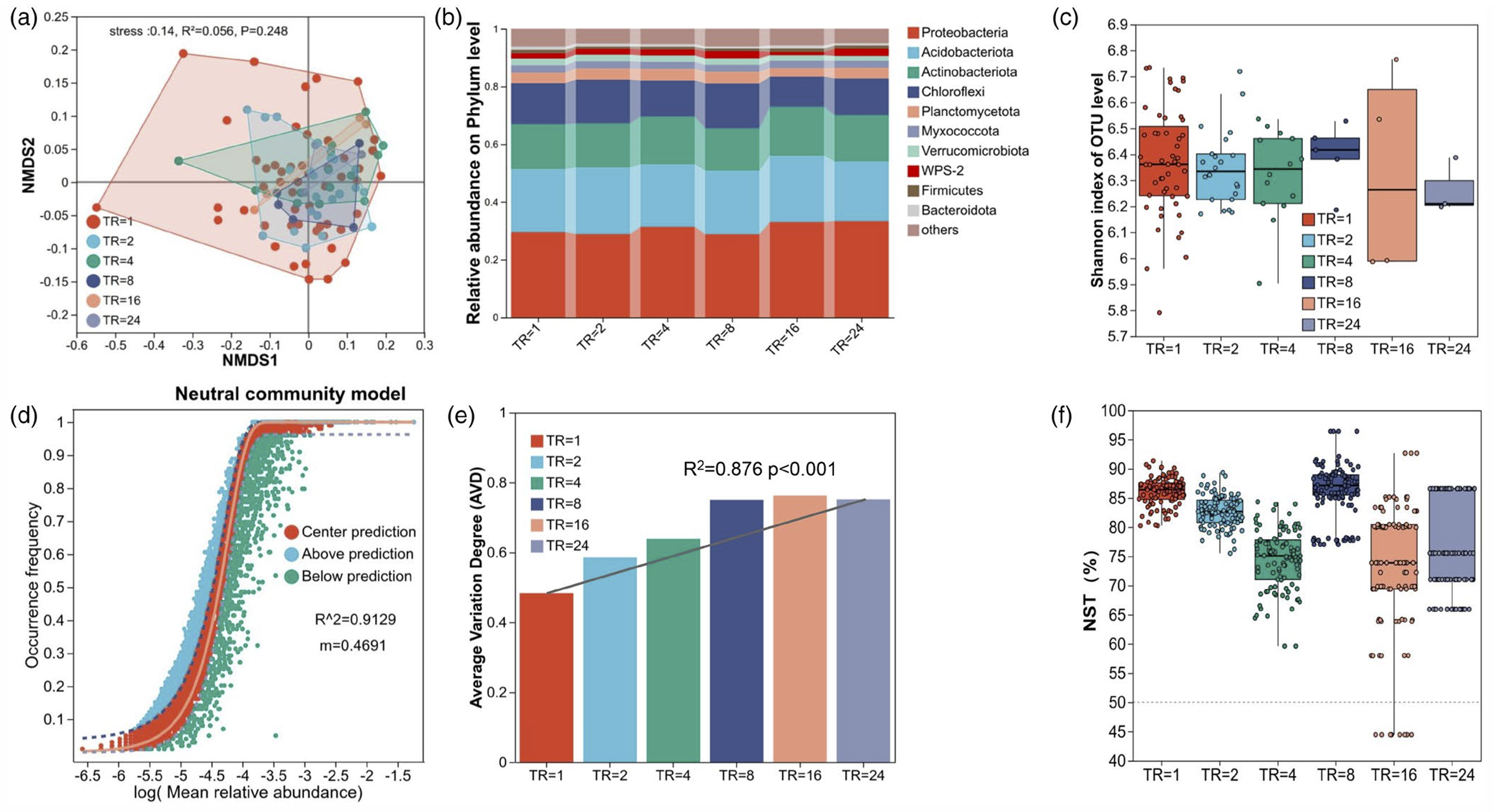
Figure 2. Effects of tree species richness on bacterial community. Non- metric multidimensional scaling analysis (NMDS) of bacterial beta diversities (a) based on Bray–Curtis distances with tree species richness.
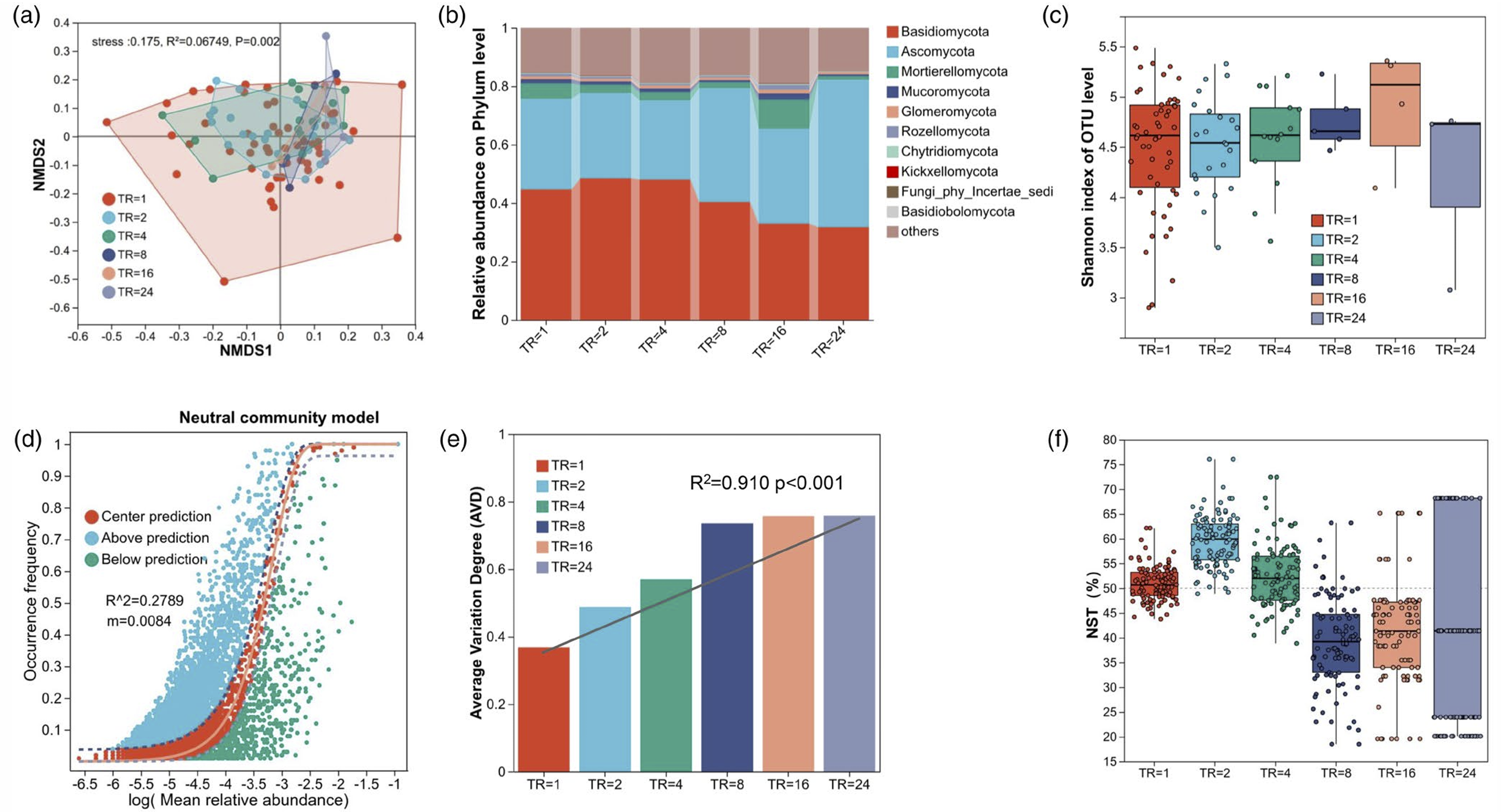
Figure 3. Effects of tree species richness on fungal community. Non- metric multidimensional scaling analysis (NMDS) of fungal beta diversities (a) based on Bray–Curtis distances with tree species richness.
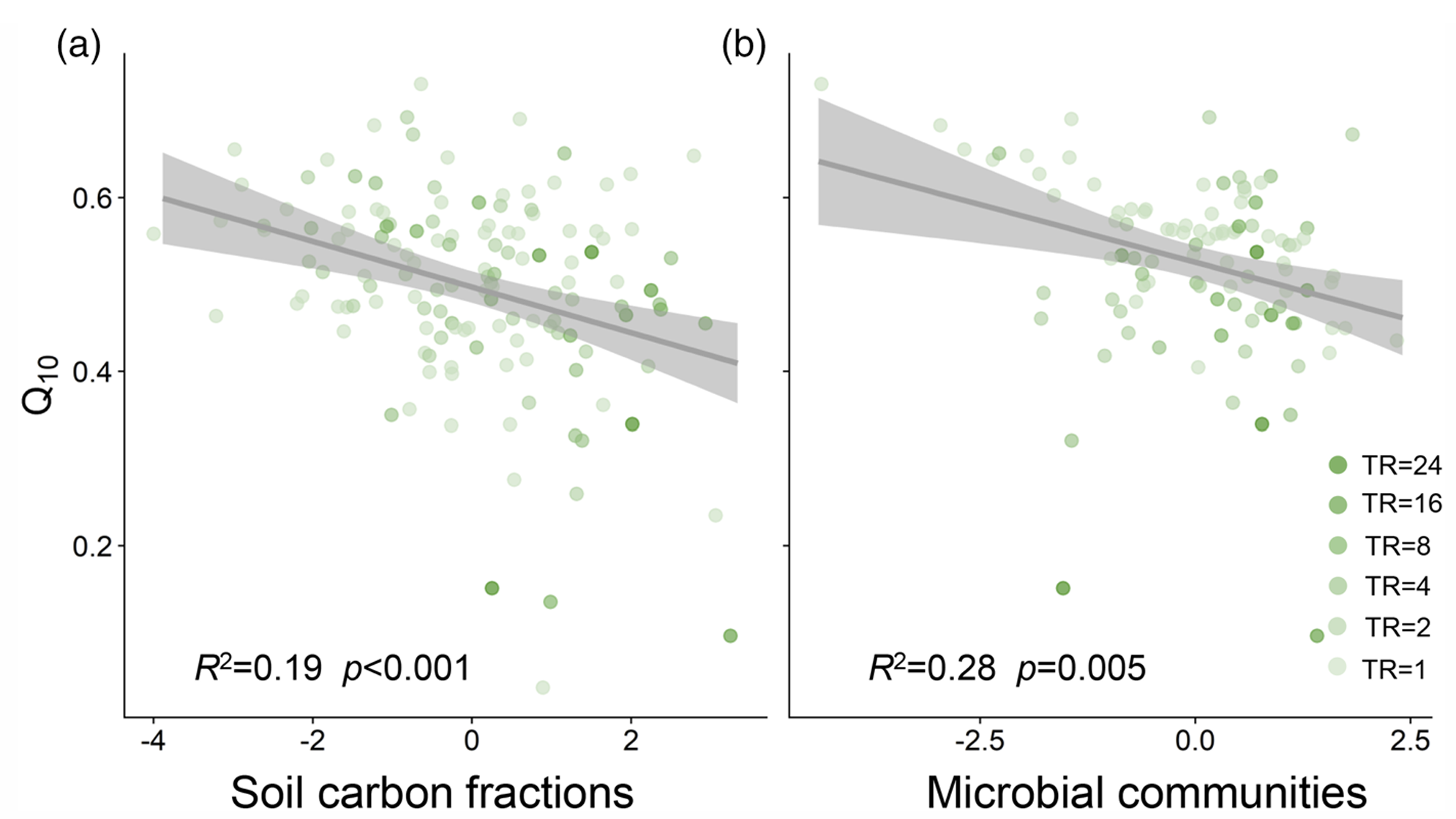
Figure 4. Relationships between Q10 and soil carbon fractions and microbial community. Panel (a) shows the relationship between Q10 and soil carbon fractions, and panel (b) shows the relationship between Q10 and microbial communities.
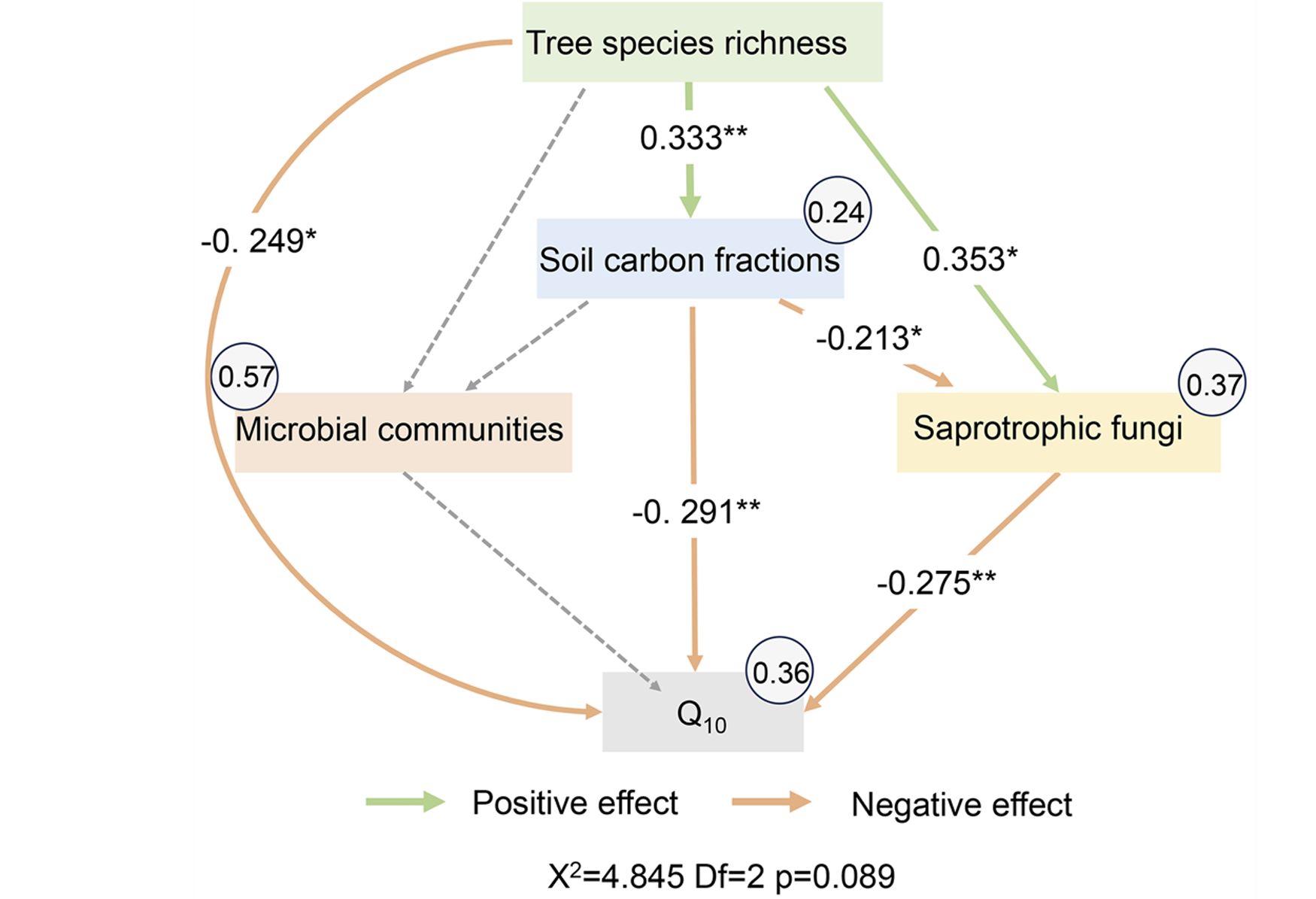
Figure 5. Direct and indirect effects of tree species richness on Q10, representing the potential temperature sensitivity of soil carbon release under standardized laboratory incubation.
Literature:
Guoyong Yan*, Xi Luo, Yajuan Xing, Chunnan Fan, Hao Liu, Qinggui Wang*, Shijie Han*. 2026. Tree diversity reduces the temperature sensitivity of soil carbon release. Journal of Ecology. 114(5):e70333. https://besjournals.onlinelibrary.wiley.com/doi/10.1111/1365-2745.70333.