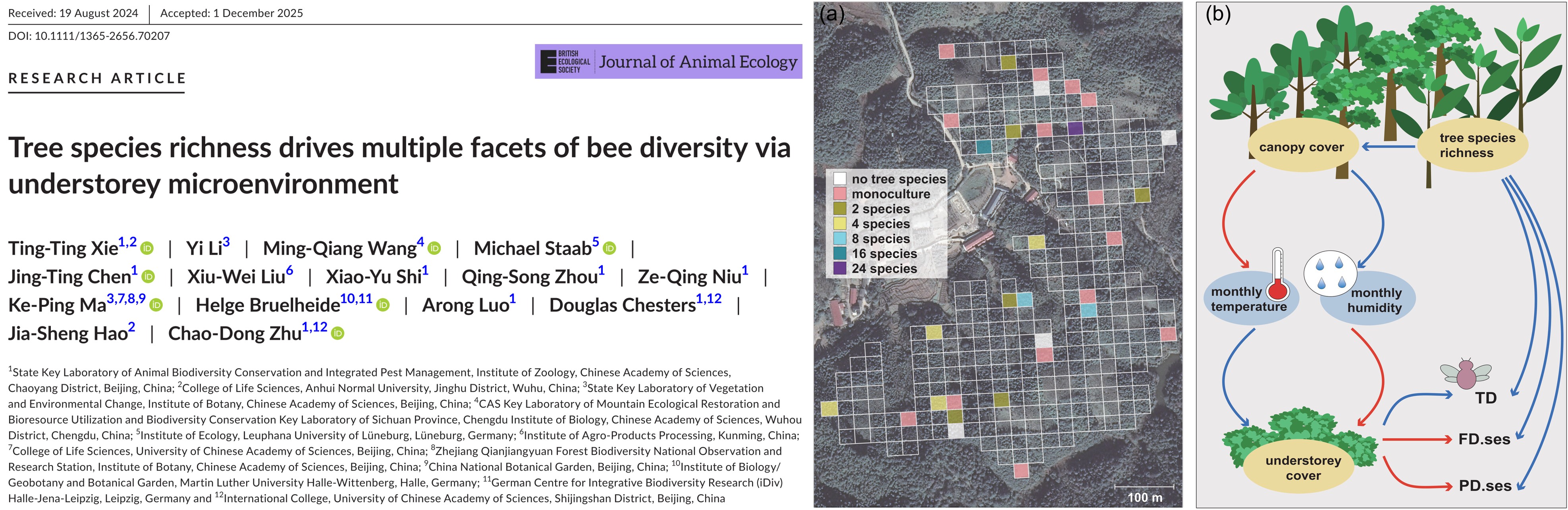
- Wild bees are widely distributed and effective pollinators, yet they face significant threats such as degradation of forests. Forest restoration has been advocated as a strategy to mitigate these threats and stabilize biodiversity. However, there is a lack of understanding of the ecological consequences of forest restoration on bee diversity, particularly regarding interactions with tree diversity and microenvironment.
- Using data from the world’s largest tree diversity experiment (BEF-China), this study examines how tree species richness, canopy cover, understorey vegetation, and microclimatic conditions affect bee diversity in the context of forest restoration.
- Our analysis of bee diversity data (8341 individuals from 79 species) revealed that these biotic factors had distinct effects on three dimensions of bee diversity. Specifically, canopy cover had a negative effect on bee taxonomic diversity but a positive effect on phylogenetic and functional diversity. However, these patterns were reversed when the cover of understorey vegetation was accounted for. Moreover, tree species richness exerted an indirect influence on bee diversity through understorey microenvironment.
- Our findings provide nuance into how tree species richness shapes bee communities via vegetation cover and microclimate, which is informative on habitat characteristics in forest restoration and conservation that better enable the safeguarding of pollinators.
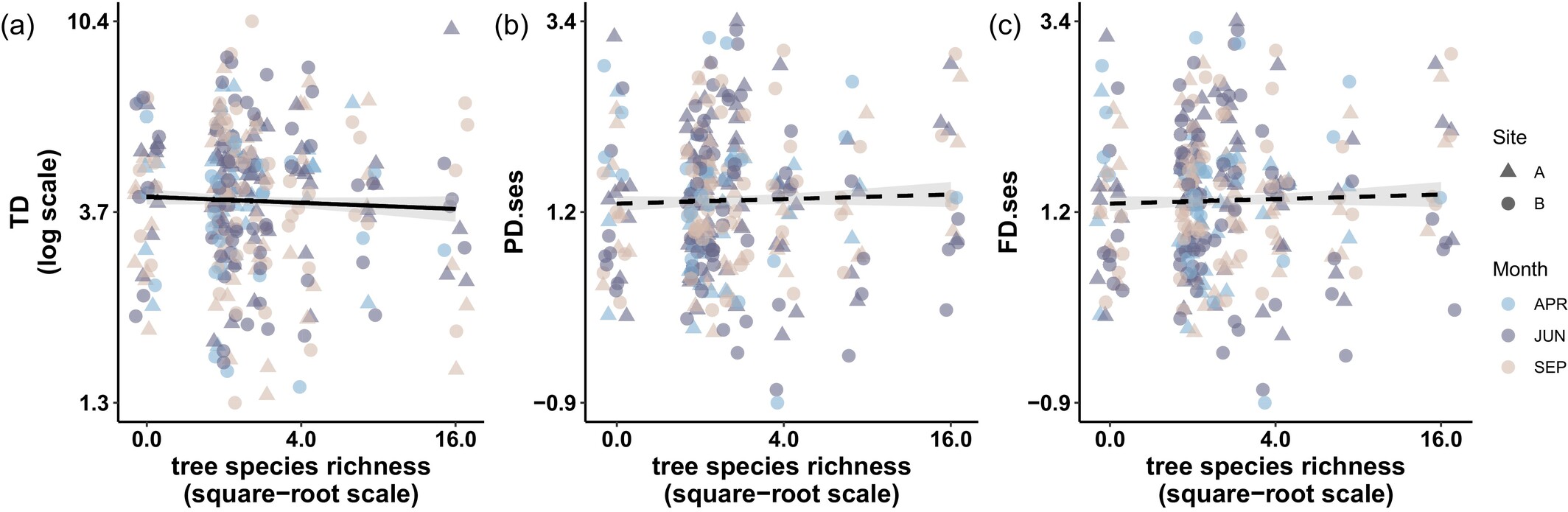
Figure 1. Relationships among tree species richness and bee (a) taxonomic diversity (TD; p < 0.05); (b) standardized effect size of phylogenetic diversity (PD.ses, p = 0.05); and (c) standardized effect size of functional diversity (FD.ses; p = 0.23).
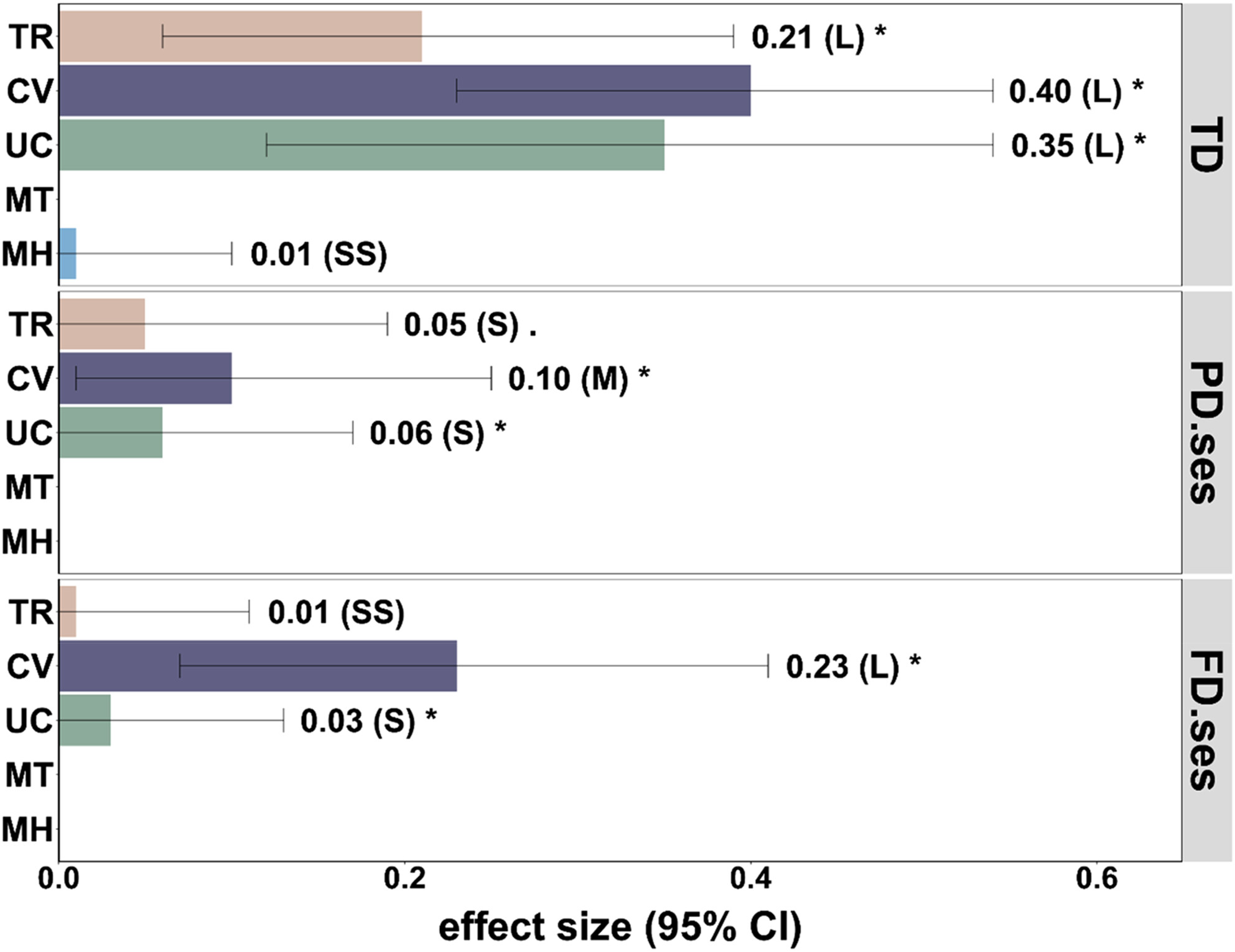
Figure 2. Effect sizes of tree species richness and microenvironment in the understorey on bee taxonomic diversity (TD), standardized effect size of phylogenetic diversity (PD.ses), and standardized effect size of functional diversity (FD.ses).
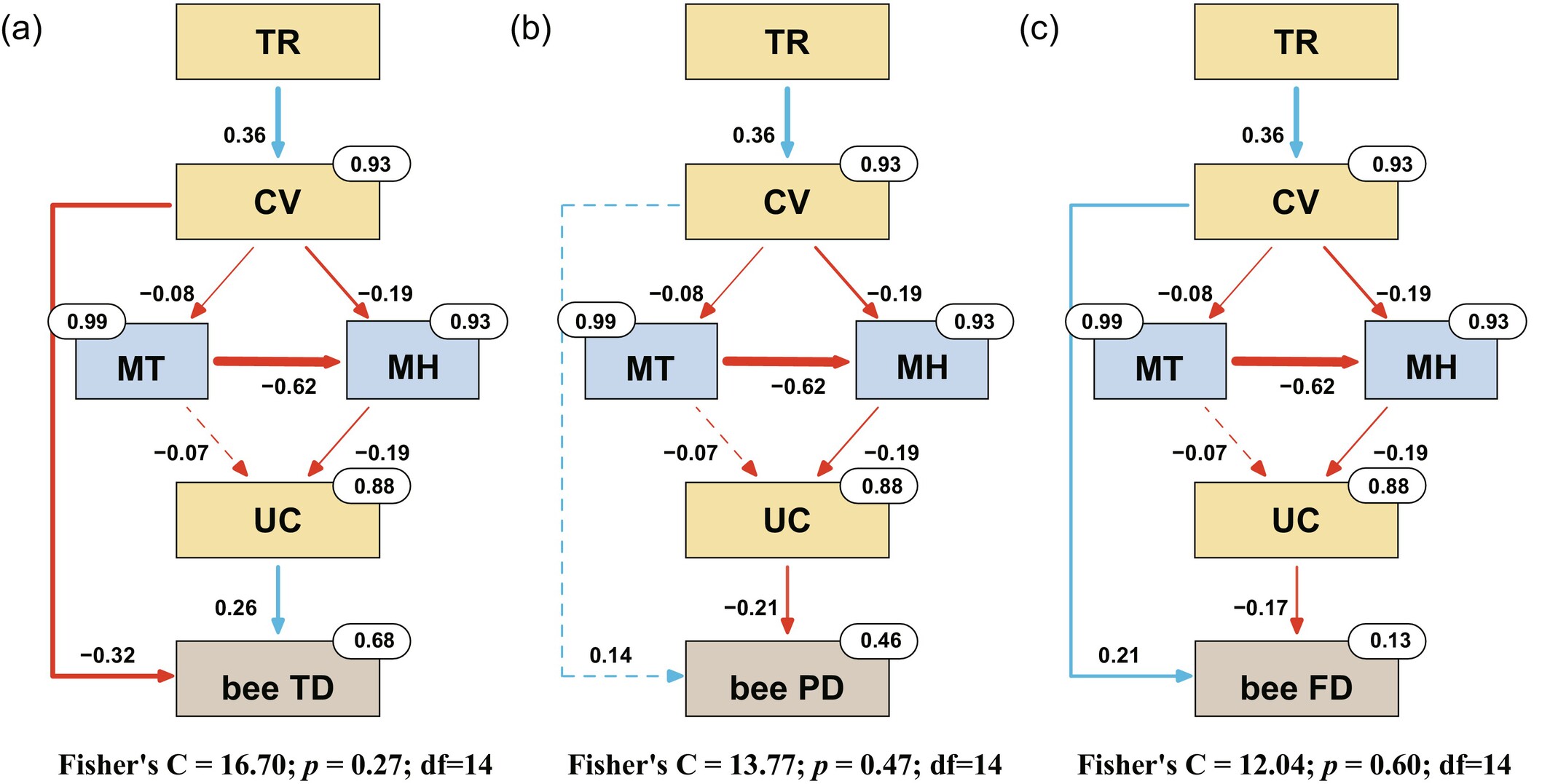
Figure 3. Structural equation models showing the direct and indirect effects of tree species richness and microenvironment in the understorey on bee (a) taxonomic diversity (TD); (b) standardized effect size of phylogenetic diversity (PD.ses); and (c) standardized effect size of functional diversity (FD.ses).
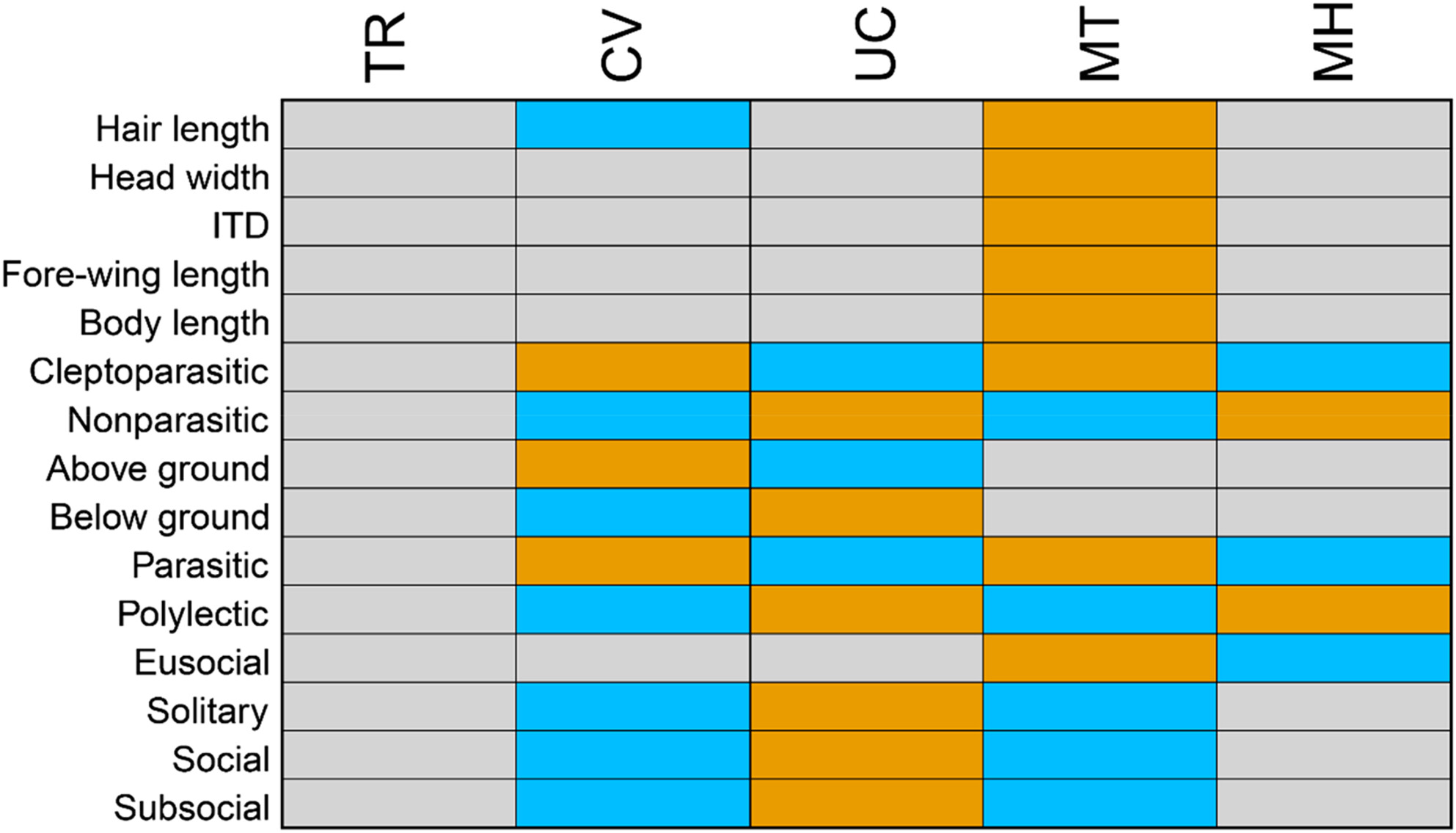
Figure 4. Results of the RLQ and fourth-corner analyses of the associations between bee traits, and tree species richness and microenvironment in the understorey.
Literature:
Ting-Ting Xie, Yi Li, Ming-Qiang Wang, Michael Staab, Jing-Ting Chen, Xiu-Wei Liu, Xiao-Yu Shi, Qing-Song Zhou, Ze-Qing Niu, Ke-Ping Ma, Helge Bruelheide, Arong Luo*, Douglas Chesters*, Jia-Sheng Hao, Chao-Dong Zhu. 2026. Tree species richness drives multiple facets of bee diversity via understorey microenvironment. Journal of Animal Ecology. 95(2):270-281. https://besjournals.onlinelibrary.wiley.com/doi/10.1111/1365-2656.70207.