Biodiversity is widely recognized as a key determinant of ecosystem stability, yet most studies have focused on diversity–stability relationships within single trophic levels, particularly plant communities. How ecological stability propagates across trophic levels and organizational scales—from populations to communities and meta-communities—remains poorly understood. In forest ecosystems, insect herbivores occupy a pivotal position linking primary producers to higher trophic levels, and changes in their diversity may influence not only their own community dynamics but also the long-term stability of plant communities through trophic interactions.
To address this knowledge gap, researchers from the Chengdu Institute of Biology, Chinese Academy of Sciences, together with collaborators from the University of Göttingen, the Institute of Zoology and the Institute of Botany of the Chinese Academy of Sciences, and Peking University, investigated biodiversity–stability relationships across trophic levels using the large-scale BEF-China forest biodiversity experiment. Based on six years of monitoring data on tree growth and lepidopteran herbivore communities collected from 52 experimental forest plots, the study established a hierarchical framework linking population, community, and meta-community stability across trophic levels. By integrating species diversity, population stability, species asynchrony, and community stability, the authors quantified the relative contributions of bottom-up and top-down regulation to ecosystem stability.
The study demonstrates that biodiversity generally stabilizes ecosystem dynamics both within and across trophic levels, and that these stabilizing effects propagate hierarchically from populations to communities and meta-communities. Species diversity enhanced ecosystem stability through complementary effects of population stability and species asynchrony, indicating that biodiversity contributes to ecological resilience at multiple organizational levels rather than within isolated communities alone.
Unexpectedly, the study found that top-down regulation exerted substantially stronger stabilizing effects than the traditionally emphasized bottom-up regulation. Herbivore species diversity significantly enhanced plant population stability and species asynchrony, thereby increasing the temporal stability of plant communities and meta-communities. In contrast, the stabilizing influence of plant diversity on herbivore communities through bottom-up pathways was comparatively weak. These findings challenge the long-held assumption that forest ecosystem stability is primarily governed by resource availability and instead highlight the critical role of consumer diversity in maintaining ecosystem stability.
The researchers further showed that the mechanisms generating stability differ fundamentally between trophic levels. Plant stability was primarily driven by the accumulation of stable populations, whereas herbivore community stability depended largely on asynchronous fluctuations among species. When herbivore species responded differently to environmental variation, declines in some species were compensated by increases in others, reducing temporal fluctuations at the community level. This result emphasizes the importance of compensatory dynamics and biodiversity in buffering environmental change.
Together, these findings provide one of the first comprehensive empirical demonstrations of how biodiversity–stability relationships scale simultaneously across trophic levels and ecological organizational levels. The study establishes a new analytical framework for understanding stability propagation from populations to meta-communities while revealing the previously underappreciated importance of top-down regulation in forest ecosystems. Given ongoing global insect declines, the results suggest that losses of consumer diversity may trigger cascading reductions in plant stability and ecosystem resilience. These findings provide important guidance for biodiversity conservation and sustainable forest management under global environmental change.
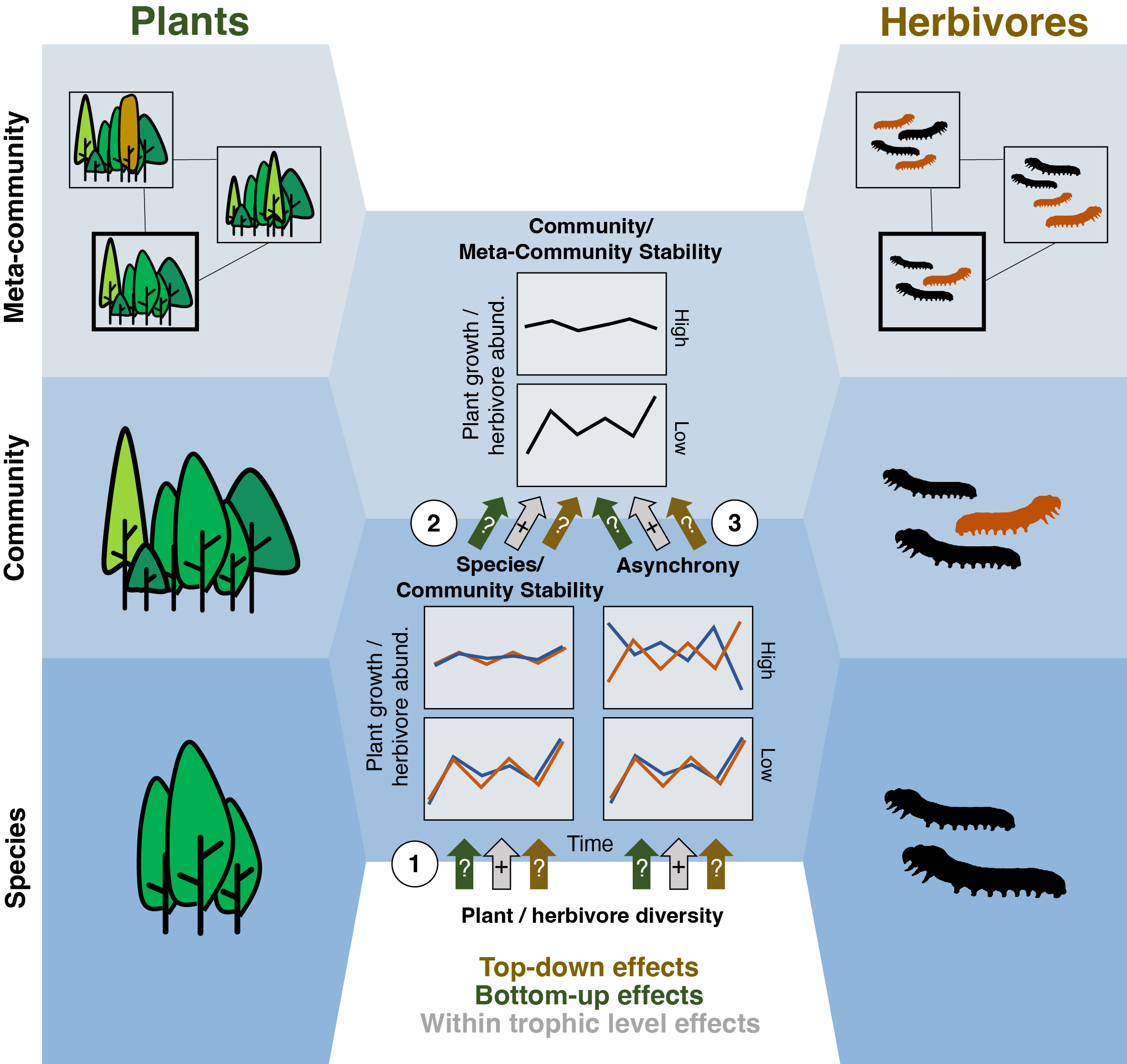
Figure 1. Conceptual figure illustrating the processes determining stability across levels of organization within and across trophic levels.
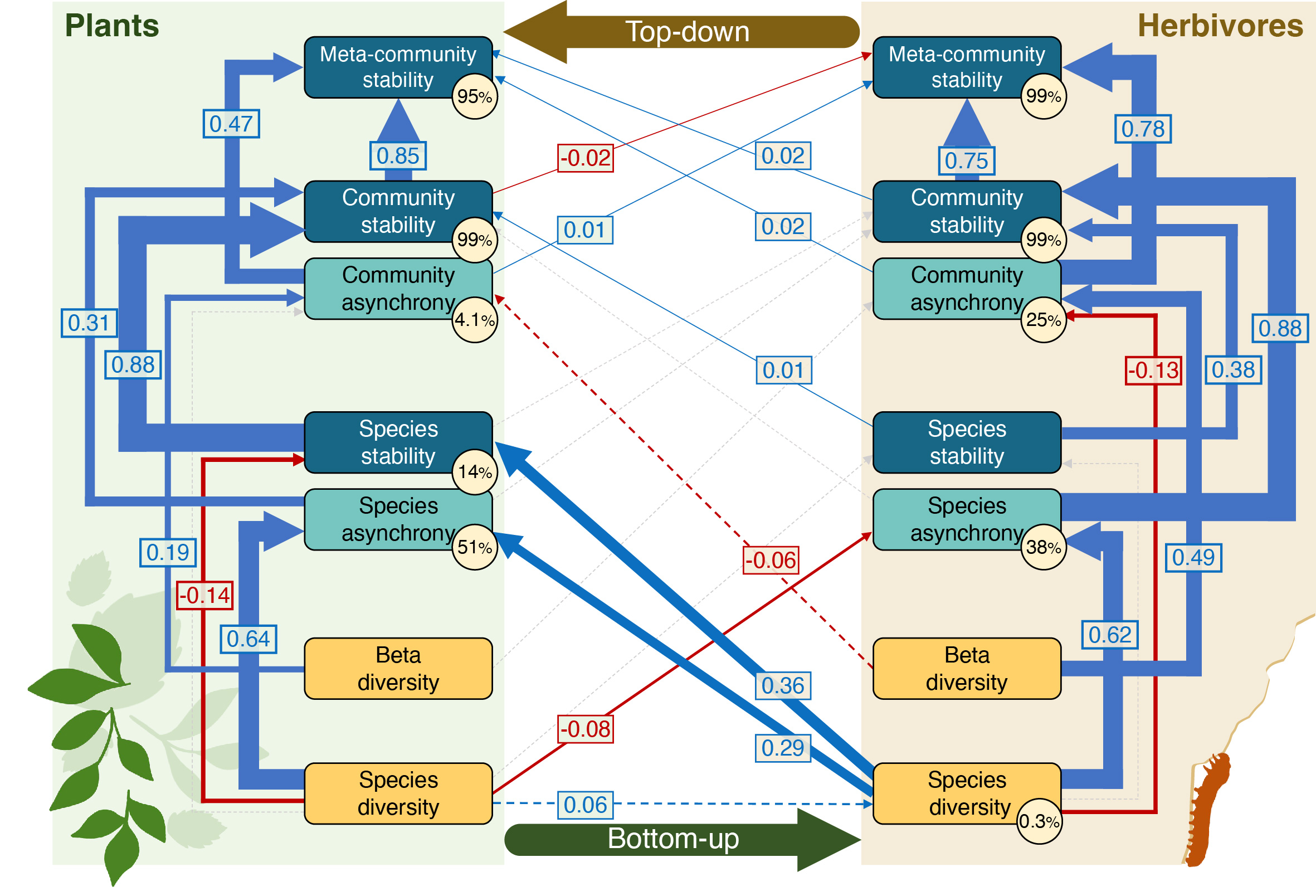
Figure 2. Pathways of stability determining processes within and across trophic levels based on structural equation model results.
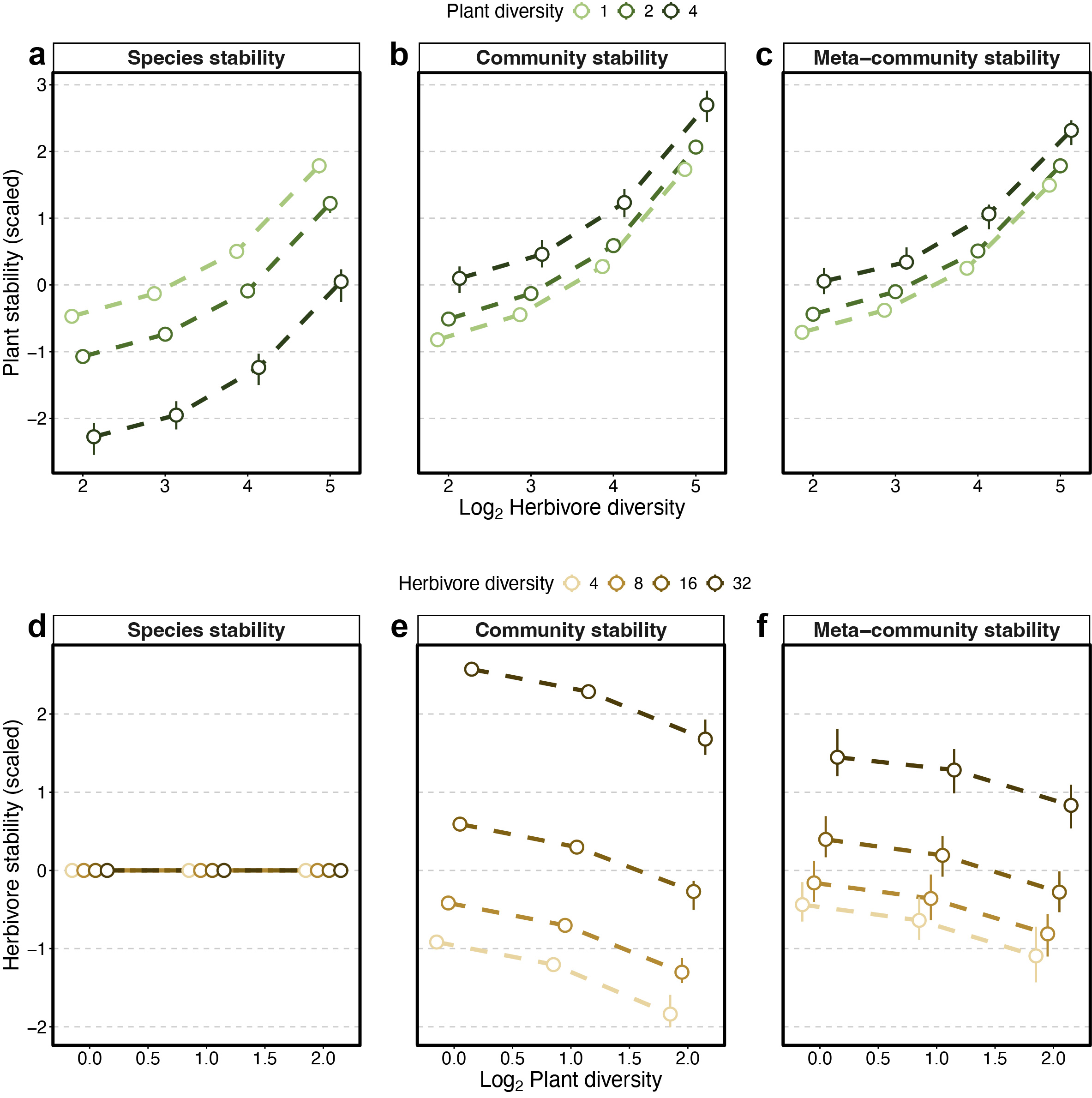
Figure 3. Summary of the interactive effects of plant and herbivore species diversity on stability across levels of organization from structural equation model.
Literature:
Ming-Qiang Wang, Shaopeng Wang, Xiaojuan Liu, Lei Zhao, Douglas Chesters, Helge Bruelheide, Yi Li, Jing-Ting Chen, Shan Li, Qing-Song Zhou, Keping Ma, Arong Luo, Andreas Schuldt*, Chao-Dong Zhu* & Georg Albert. 2026. Scaling biodiversity–stability relationships from populations to meta-communities across trophic levels. Nature Communications. 17:6038. https://www.nature.com/articles/s41467-026-75366-1.