-
Seasonal dynamics of tree growth, specifically intra-annual variation in growth timing and rates, are critical for forest carbon sequestration. However, the mechanisms by which neighbourhood interaction affects these responses remain unclear in species-rich subtropical forests.
-
We monitored radial growth of 2478 trees from 35 species over 3 years in the BEF-China experiment to examine how neighbourhood functional composition, that is functional dominance and diversity influence growth phenology and annual growth. We used gradients of traits related to resource acquisition (e.g. specific leaf area, leaf phosphorus, xylem conductivity) and water-use control (e.g. wood density, stomatal density/index) to quantify functional dominance (community-weighted means; CWM) and functional diversity (Rao’ Q) in 8-tree neighbourhoods.
-
Our results showed that neighbourhood effects depended on focal-tree trait syndromes. Trees with resource-acquisitive traits started and ended fast growth earlier but reached a lower maximum daily growth rate. In contrast, conservative water-use trees delayed the end of fast growth and achieved a higher maximum daily growth rate, consistent with temporal niche differentiation. Functional diversity interacted with focal traits: in acquisitive trees, higher functional diversity along both trait axes tended to delay the start and end of fast growth, whereas in conservative water-use trees, higher functional diversity advanced start and increased maximum daily growth rate, particularly in neighbourhoods dominated by such water-conserving traits (high CWM on the water-use axis). Structural equation models showed that earlier start, later end and higher maximum daily growth rate together increased annual growth. Among these, the effect of maximum daily growth rate was the strongest. Fixed effects of focal and neighbourhood traits accounted for relatively limited 8–19% of variation in phenology metrics (marginal R2: start = 0.082, end = 0.191, maximum rate = 0.131). These findings suggest that neighbourhood functional composition is one of multiple factors driving phenological timing and productivity.
-
Synthesis. Shaped by focal-tree trait syndromes, neighbourhood functional diversity was associated with growth phenology and annual productivity in subtropical forests, which points to temporal niche complementarity as a contributing mechanism in biodiversity–productivity relationships.
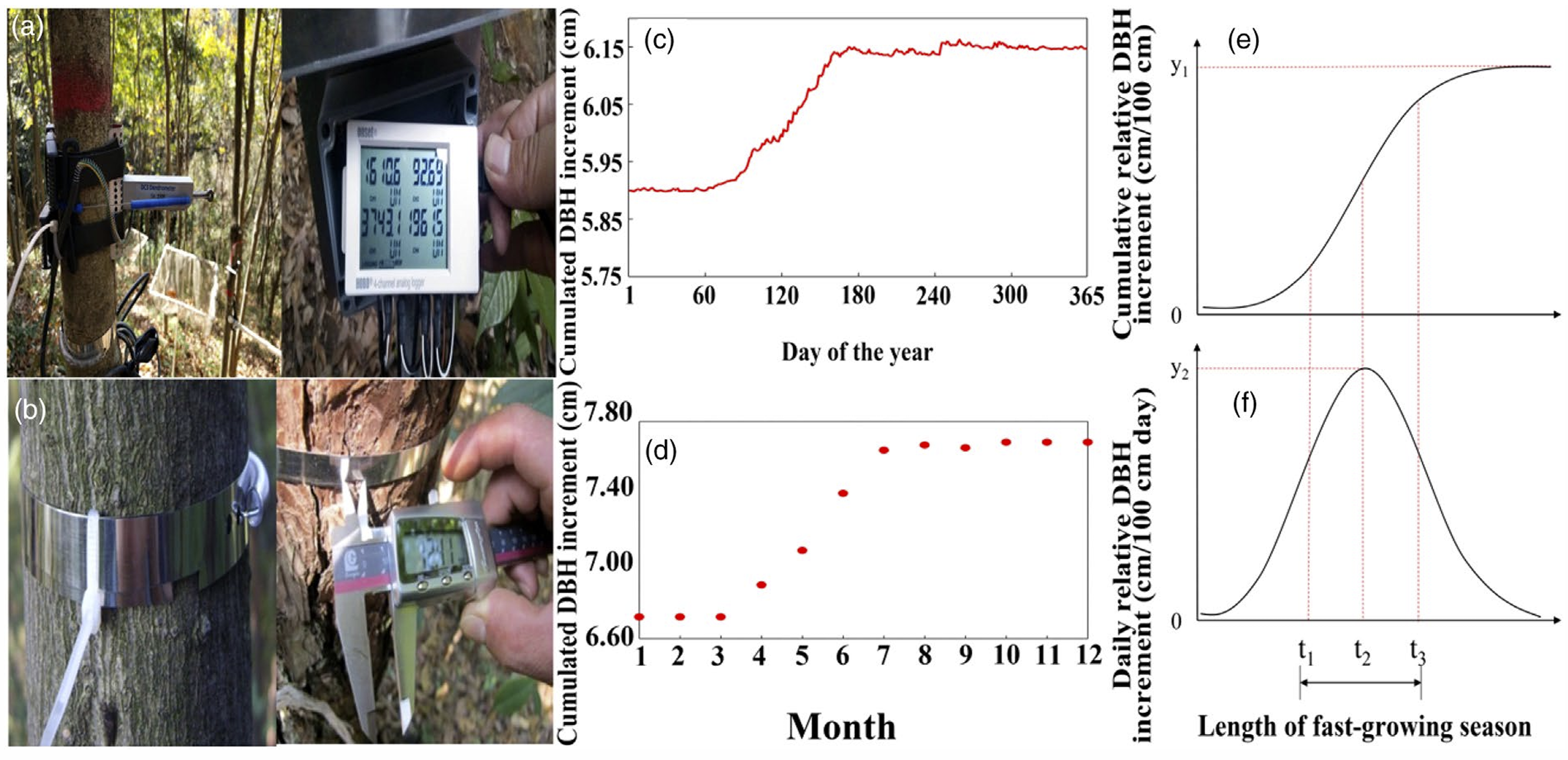
Figure 1. The automatic dendrometer, recording at 30-min intervals (a, c) and man-made dendrometer band, recording at monthly intervals (b, d), were installed to monitor the radial growth of each focal tree.
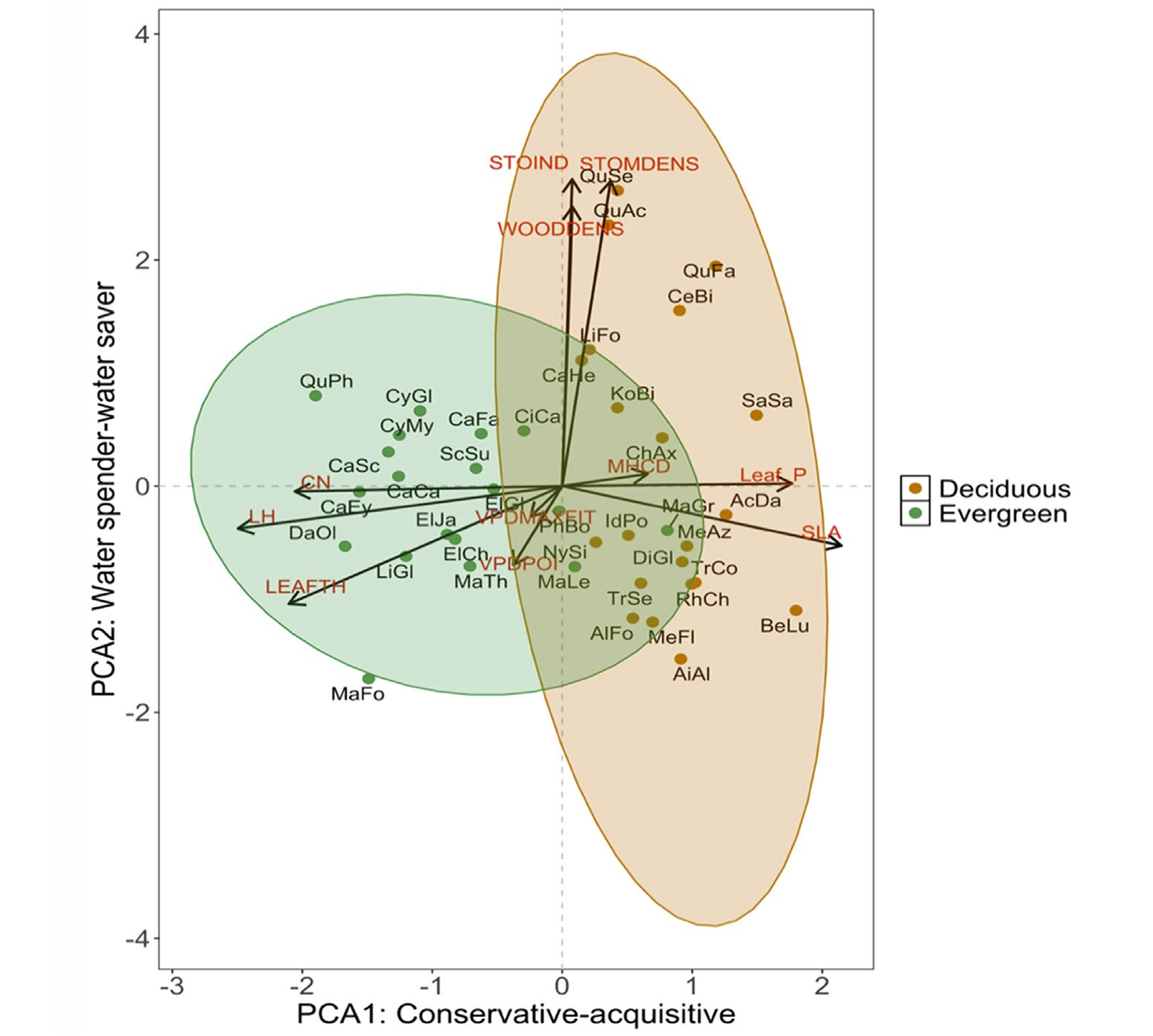
Figure 2. Principal component analysis (PCA) biplot for 11 functional traits across 40 species, illustrating two major gradients of plant strategies.
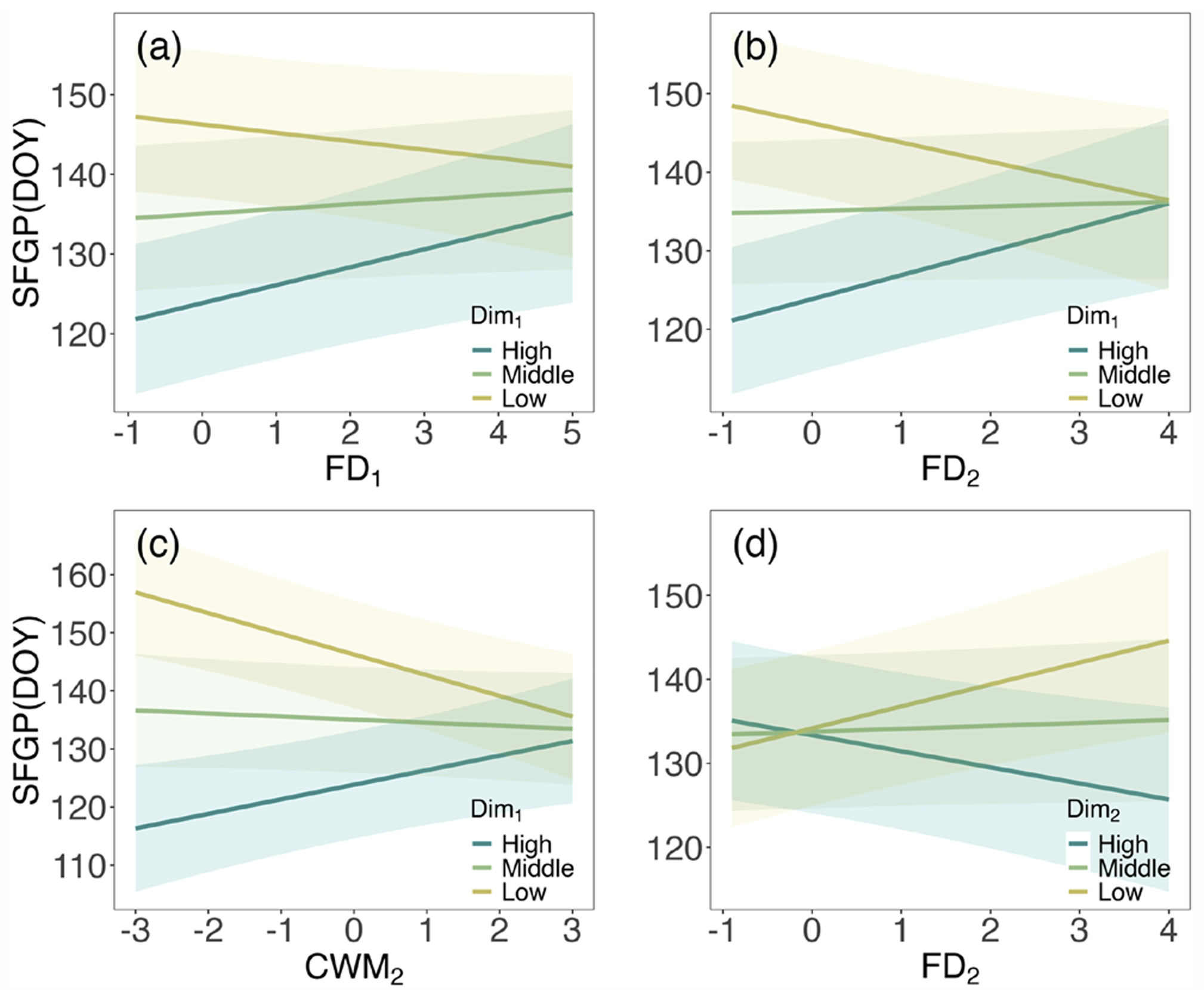
Figure 3. Interactive effects of both focal-tree traits and neighbourhood functional structure on the start of the fast-growing phase (SFGP) are summarized in Table 2. SFGP, at different fixed levels of focal-tree traits (Dim1 and Dim2), is shown as a function of neighbourhood functional diversity for FD1 (a), FD2 (b, d) and the community-weighted mean of PCA2 (CWM2) (c).
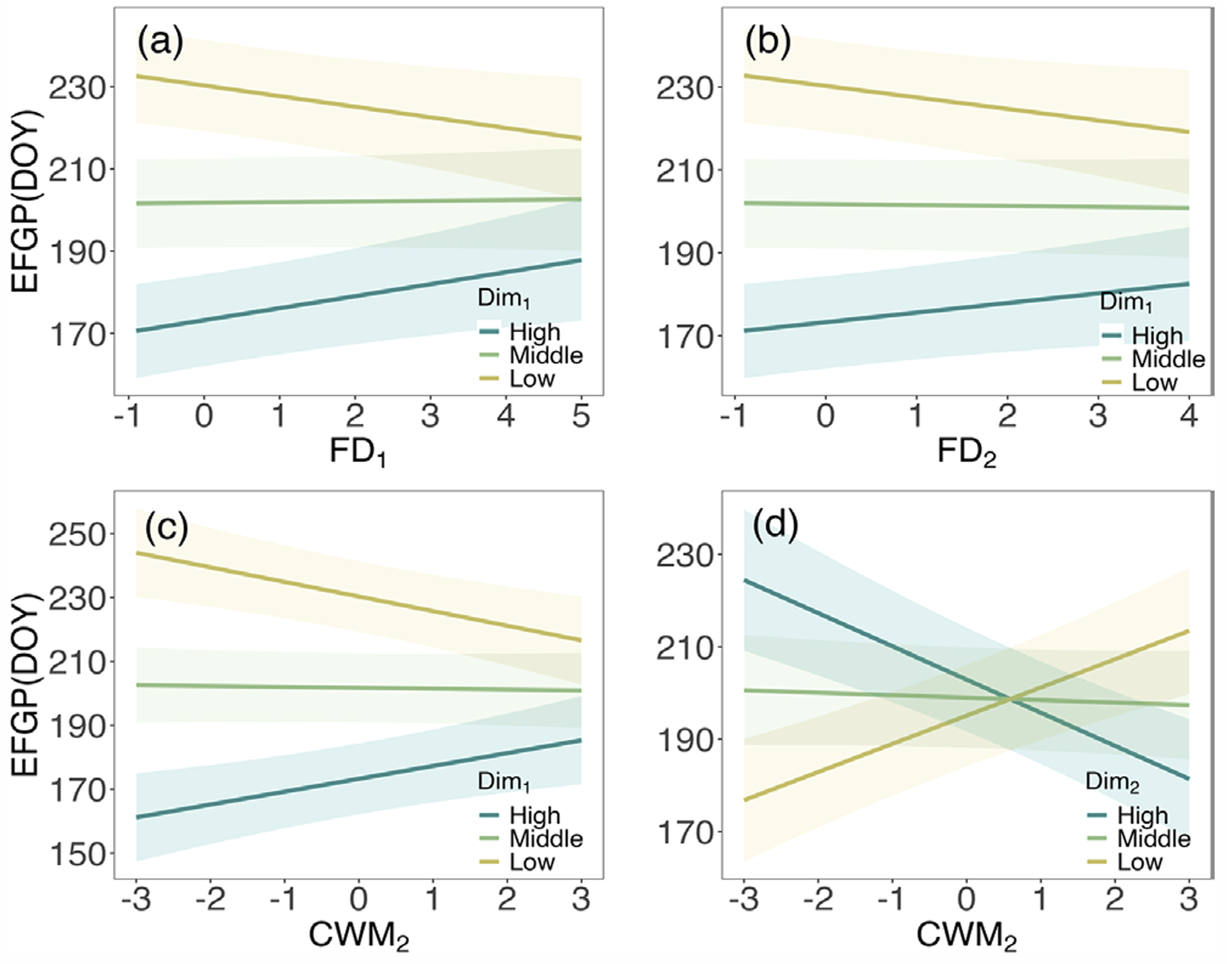
Figure 4. Significant interactive effects of focal-tree and neighbouring-tree traits on the end of the fast-growing phase (EFGP). EFGP responses are shown across different fixed levels of focal-tree traits (Dim1 and Dim2) in relation to neighbourhood functional diversity (FD1, FD2) and functional dominance (CWM2).
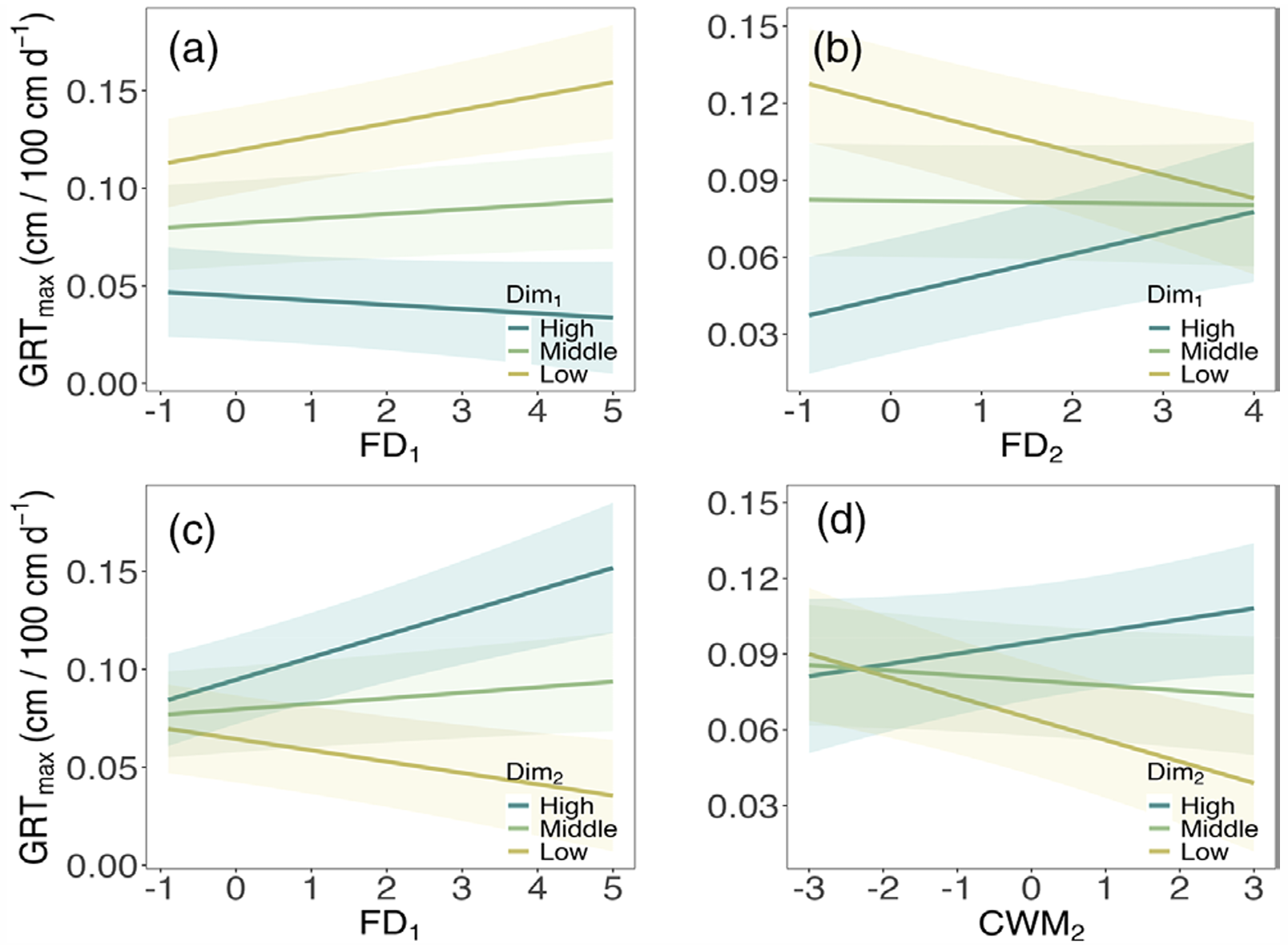
Figure 5. Significant interactive effects of focal-tree and neighbouring-tree traits on the maximum daily growth rate (GRTmax).
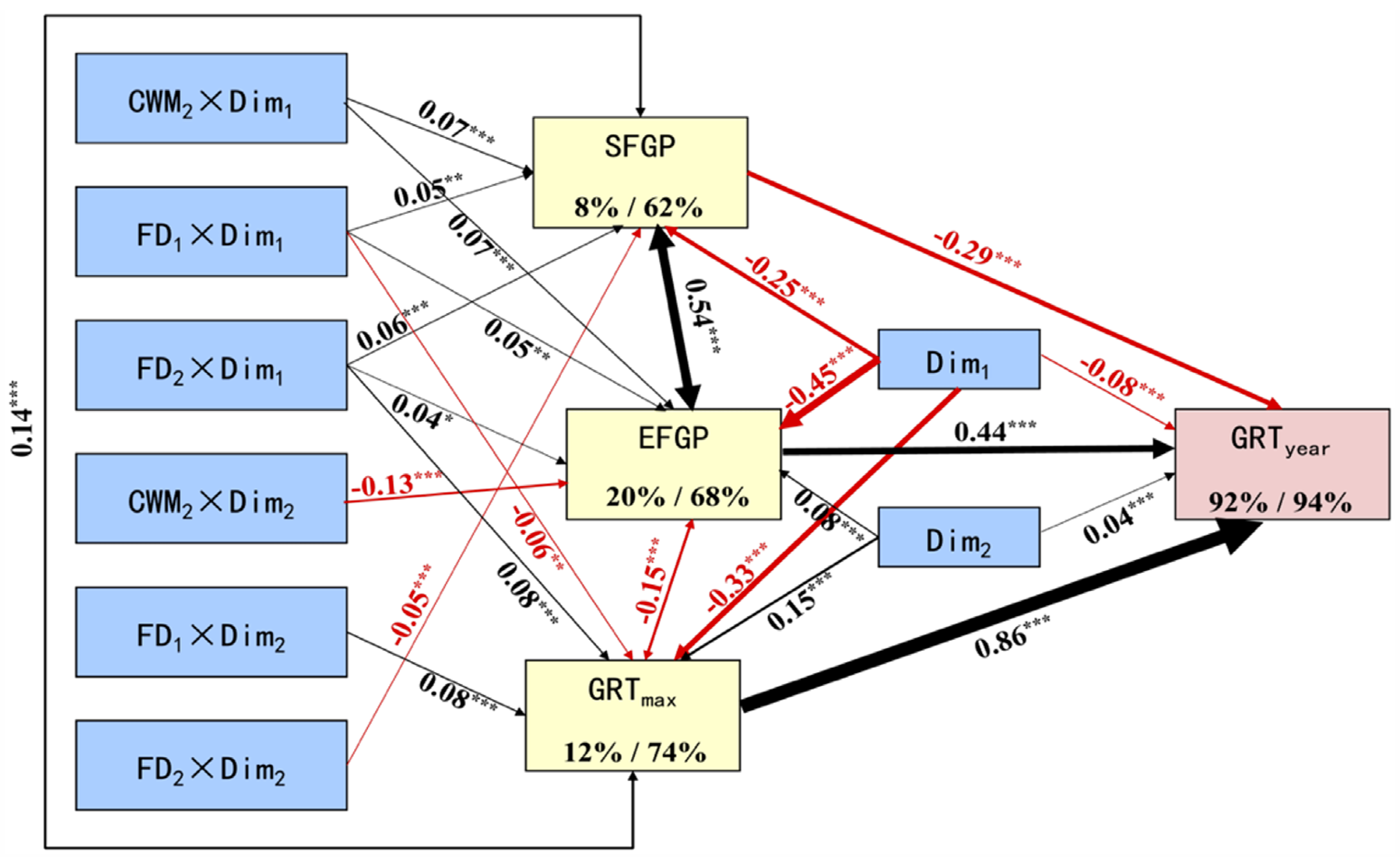
Figure 6. Structural equation model (Fisher's C = 0.21, df = 2, p = 0.898) indicates how focal-tree traits (Dim), their interactions with neighbourhood functional diversity (FD) and community-weighted mean (CWM), as well as growth phenological parameters—start (SFGP) and end (EFGP) of the fast-growing phase, and maximum daily growth rate (GRTmax)—collectively influence the annual cumulative growth rate (GRTyear) of focal-trees.
Literature:
Gheyur Gheyret, Hong‐Tu Zhang, Yun‐Hao Bai, Zhiyao Tang*. 2026. Tree growth phenology shifts in response to trait‐based neighbourhood effects in a large subtropical forest biodiversity experiment. Journal of Ecology. 114(6):e70373. https://besjournals.onlinelibrary.wiley.com/doi/10.1111/1365-2745.70373.