Anthropogenic disturbances threaten forest biodiversity and the ecosystem functions sustained by multitrophic interactions. Understanding how biodiversity loss alters the balance between bottom-up (resource-driven) and top-down (predation-driven) forces in soil food webs is crucial for predicting ecosystem responses to global change. However, the role of plant diversity in regulating these trophic dynamics and their subsequent impact on soil quality remains poorly understood. Here, we leverage a large-scale subtropical forest biodiversity experiment (BEF-China) to examine how tree species richness influences the soil mite community (predatory Gamasida and their prey oribatid mites) and a multifunctional soil quality index (SQI). We found that higher tree species richness strengthened both bottom-up control by increasing the abundance of predatory and juvenile oribatid mites and modulated top-down processes by intensifying the strength of the positive relationship between predator and prey abundance. Although tree species richness elicited selective effects on litter and soil properties (significantly increasing soil organic carbon and litter organic carbon while reducing litter nitrogen content), its most profound impacts manifested through trophic interactions. Furthermore, increased tree species richness significantly enhanced soil quality. Ultimately, our study highlights the critical importance of maintaining forest tree diversity to preserve soil microarthropod communities and sustain soil quality.
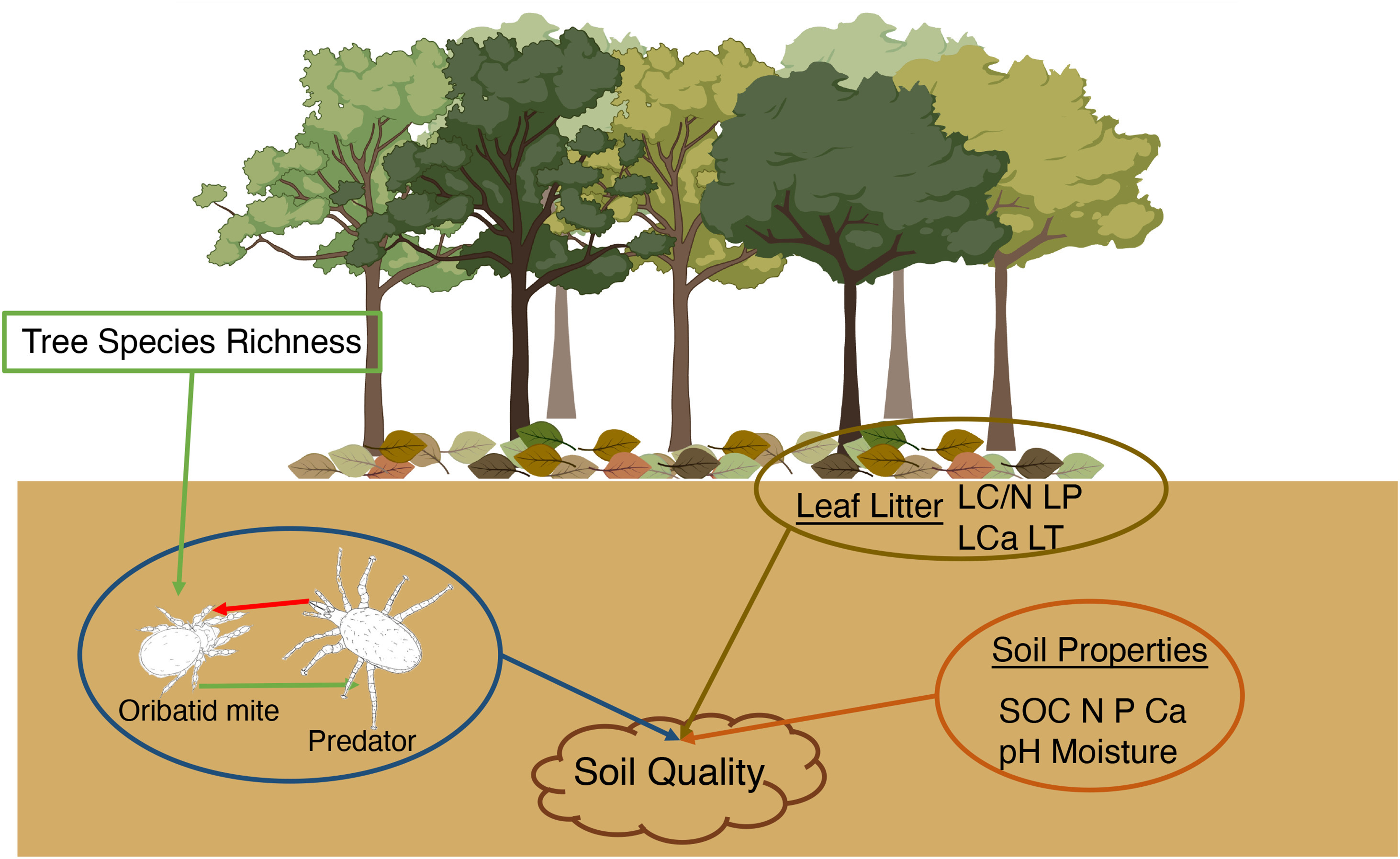
Figure 1. Graphical illustration of framework.
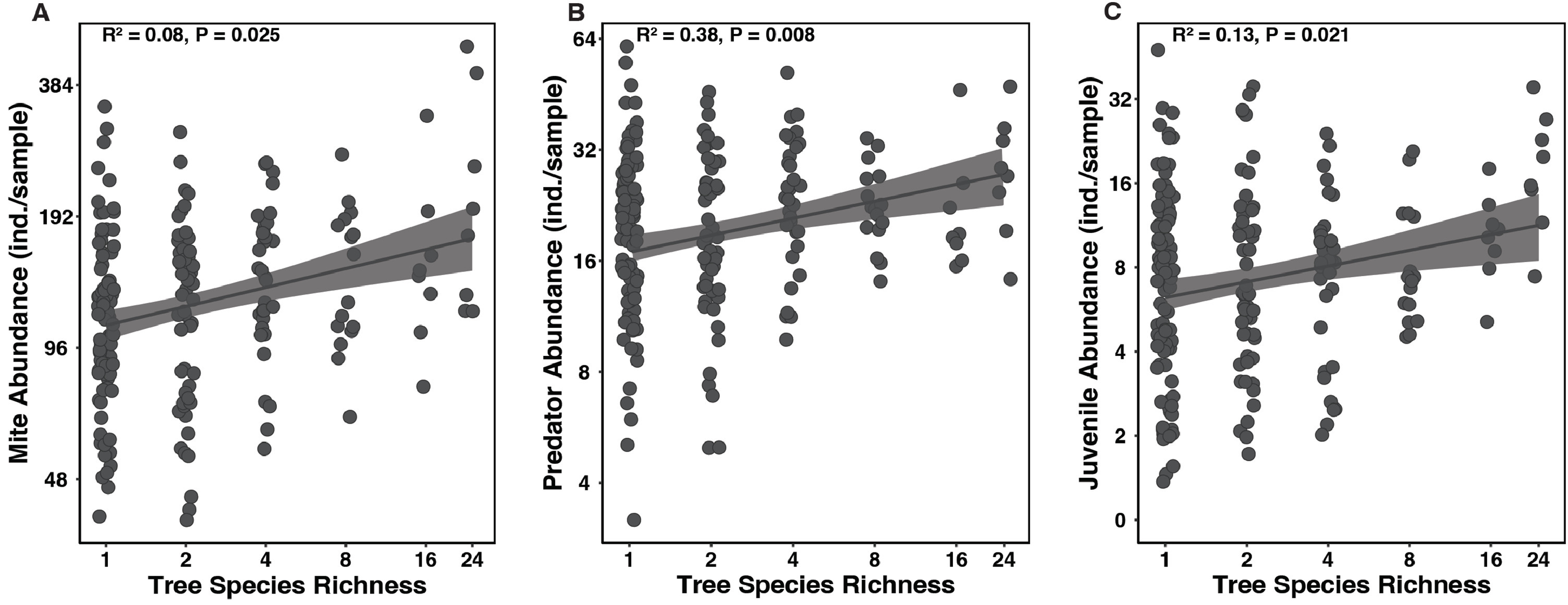
Figure 2. Relationships between tree species richness and all mite abundance (A), Gamasida abundance (B), and oribatid mite juvenile abundance (C).
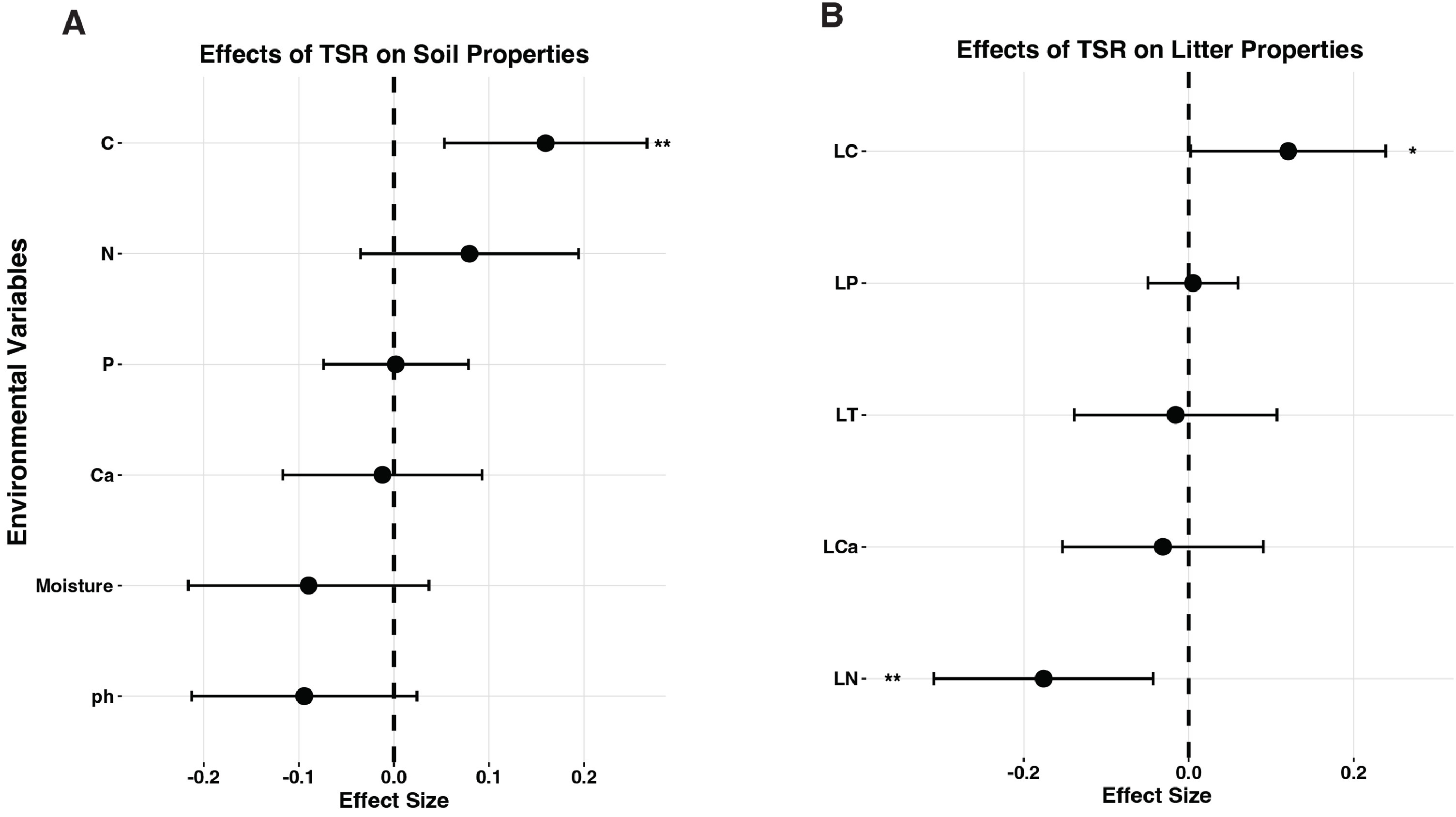
Figure 3. Effect size of relationships between tree species richness (TSR) and soil (A) and litter (B) properties.
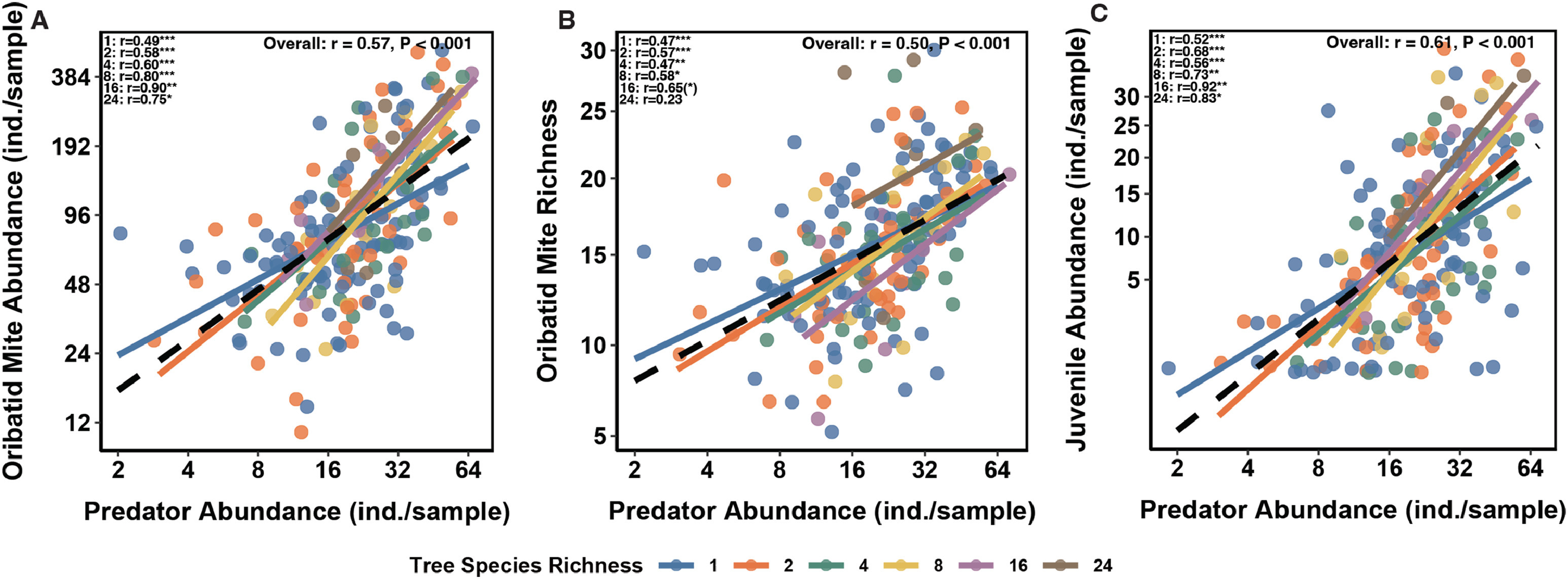
Figure 4. Relationship between predator (Gamasida) abundance and oribatid mite adult abundance (A), species richness (B), and juvenile abundance (C).
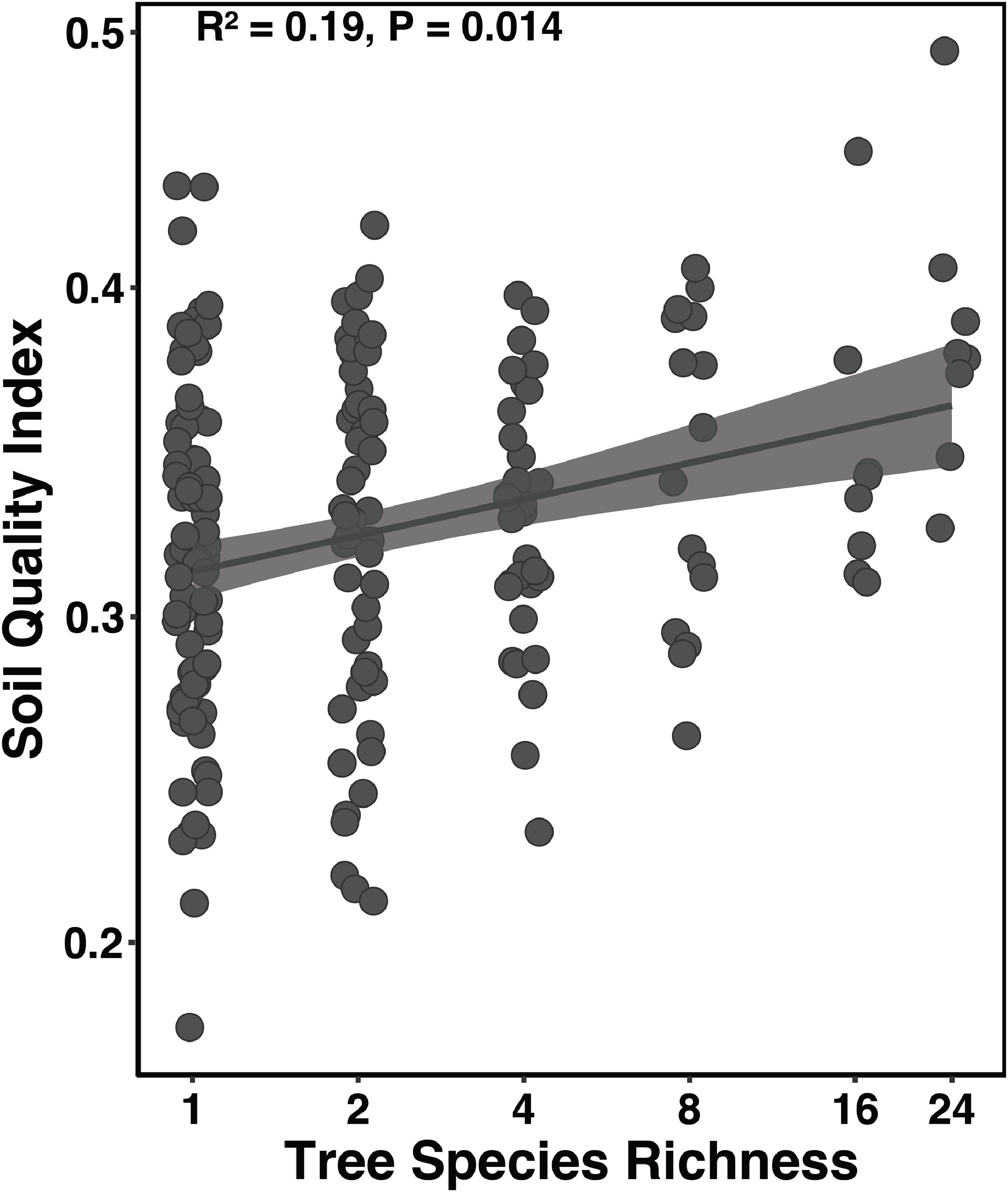
Figure 5. Relationships of tree species richness with soil quality index. Note that axis values are on a log‐scale for tree species richness.
Literature:
Yannan Chen, Yu Chen, Yuhui Ding, Gexia Qiao*, Jun Chen*. 2026. Effects of subtropical forest tree species richness on soil mite biodiversity and soil quality. Basic and Applied Ecology. Online. https://www.sciencedirect.com/science/article/pii/S1439179126000320?via%3Dihub.