Forest management prioritizes sustaining primary productivity and conserving biodiversity, with its processes profoundly influenced by tree mycorrhizal associations and their interactions with soil fauna. However, how mycorrhizal types structure belowground communities is poorly understood. Here, we investigated how arbuscular mycorrhizal (AM), ectomycorrhizal (EM), and mixed (AM × EM) tree species influence oribatid mite communities in a subtropical forest ecosystem. By analyzing environmental factors (canopy cover, litter traits, soil properties) and oribatid mite community metrics (density, species richness, functional traits, and functional diversity) across 21 plots, we identified key drivers of oribatid mite community assemblies among tree mycorrhizal association types. Results revealed that AM tree stands, characterized by rapid litter decomposition and high fungal diversity, supported fungal-feeding oribatid mites with high δ13C values, indicating microbial-processed carbon utilization. In contrast, EM tree stands favored parthenogenetic species under thick, recalcitrant litter layers, correlating with higher oribatid mite densities. Mixed mycorrhizal type stands exhibited intermediate traits, suggesting that resource complementarity enhances functional redundancy. Redundancy analysis highlighted canopy cover, litter thickness, soil fungal diversity and soil phosphorus as critical drivers of oribatid mite community structure. These findings demonstrate that mycorrhizal types act as ecological filters, shaping soil fauna through cascading effects on litter chemistry and microbial interactions. Our study underscores the importance of integrating mycorrhizal diversity into forest management to sustain soil biodiversity and ecosystem resilience under global change.
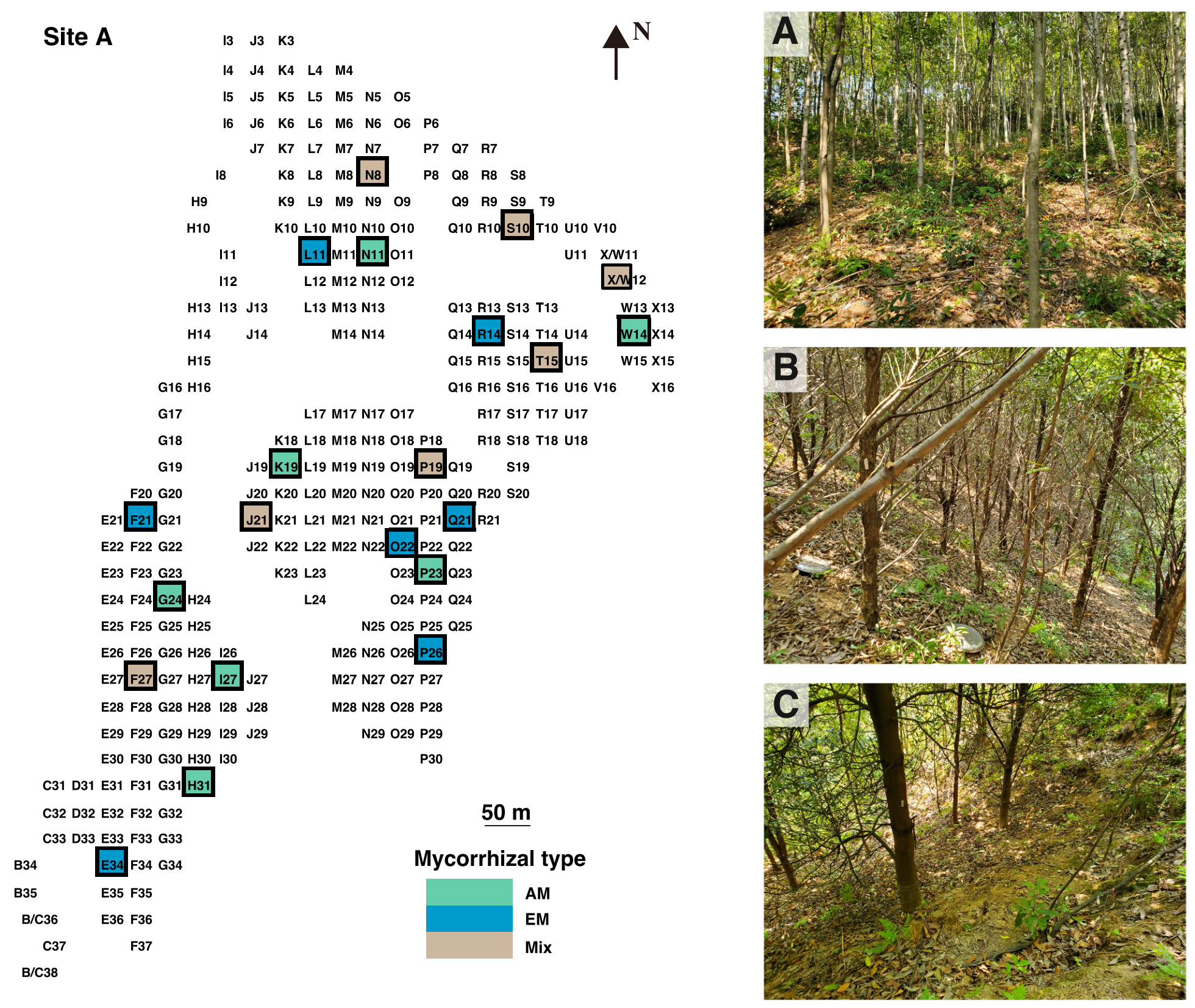
Figure 1. Overview of the experimental site of BEF-China (Site A) and the study plots selected for the current study (with bold-black outline).
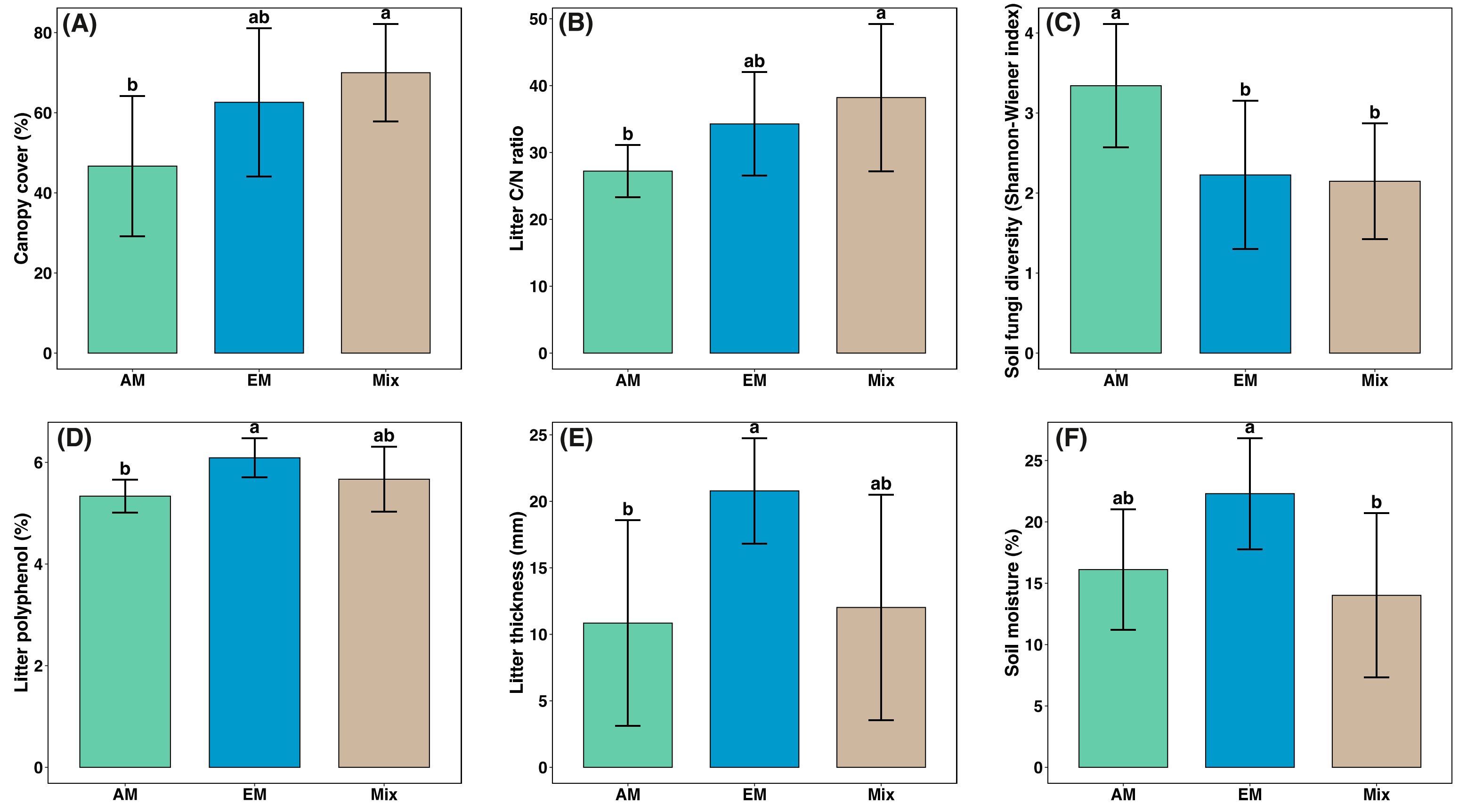
Figure 2. Changes in canopy cover (A), litter C/N ratio (B), soil fungi diversity (Shannon-Wiener index) (C), litter polyphenol (D), litter thickness (E), and soil moisture (F) in study plots of three mycorrhizal types (arbuscular mycorrhizal (AM), ectomycorrhizal (EM), and mixed (Mix) mycorrhizal types).
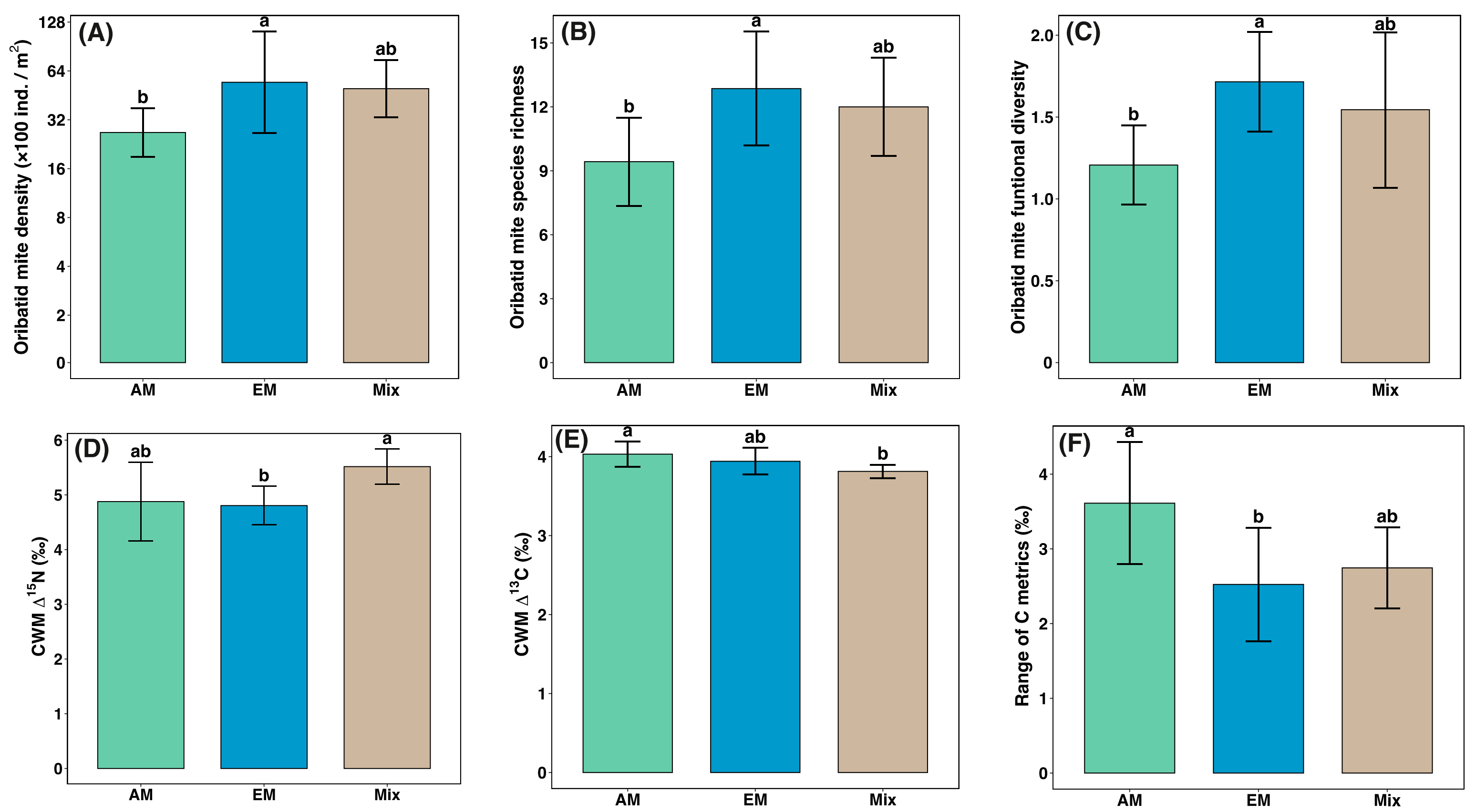
Figure 3. Changes in oribatid mite density (A), species richness (B), functional diversity (Rao'Q) (C), community weighted mean (CWM) Δ15N (D), CWM Δ13C (E), and range of C metrics (F) of oribatid mite communities among three mycorrhizal types (arbuscular mycorrhizal (AM), ectomycorrhizal (EM), and mixed (Mix) mycorrhizal types).
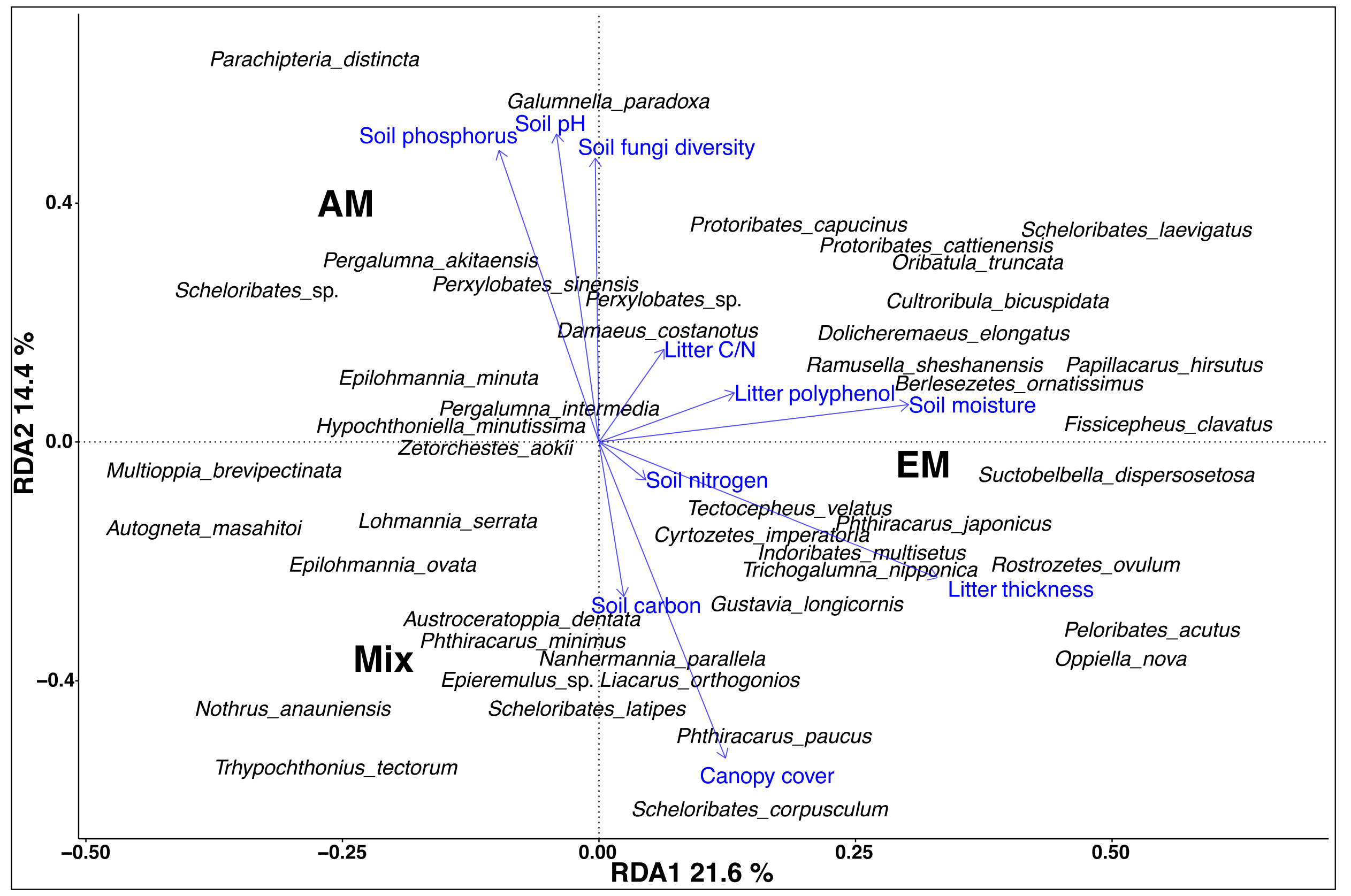
Figure 4. Redundancy analysis (RDA) of oribatid mite communities as related to environmental factors (arrows) across mycorrhizal association types (arbuscular mycorrhizal (AM), ectomycorrhizal (EM), and mixed (Mix) mycorrhizal types).
Literature:
Yannan Chen, Chenglin Liu, Yu Chen, Xue Pan, Yuhui Ding, Stefan Scheu, Mark Maraun, Jun Chen*. 2025. Tree mycorrhizal association types shape oribatid mite communities in a subtropical forest. Applied Soil Ecology. 214:106397. https://www.sciencedirect.com/science/article/abs/pii/S0929139325005359?via%3Dihub